Productivity
Focus Techniques
What is Body Doubling?
Work in the presence of another person to focus, reduce procrastination, and get more done through gentle accountability.
By Rupert GoughPublished
Key takeaways
- Body doubling means working with another person present - you don't interact much, their presence alone helps you focus
- It works through social facilitation: when others work around you, your brain mirrors that focused behaviour
- Especially helpful for people with ADHD who struggle with motivation and getting started on tasks
- Works both in-person (coworking space, café) and virtually (video call with someone working alongside)
- Choose your body double carefully - someone reasonably disciplined helps more than someone distractible
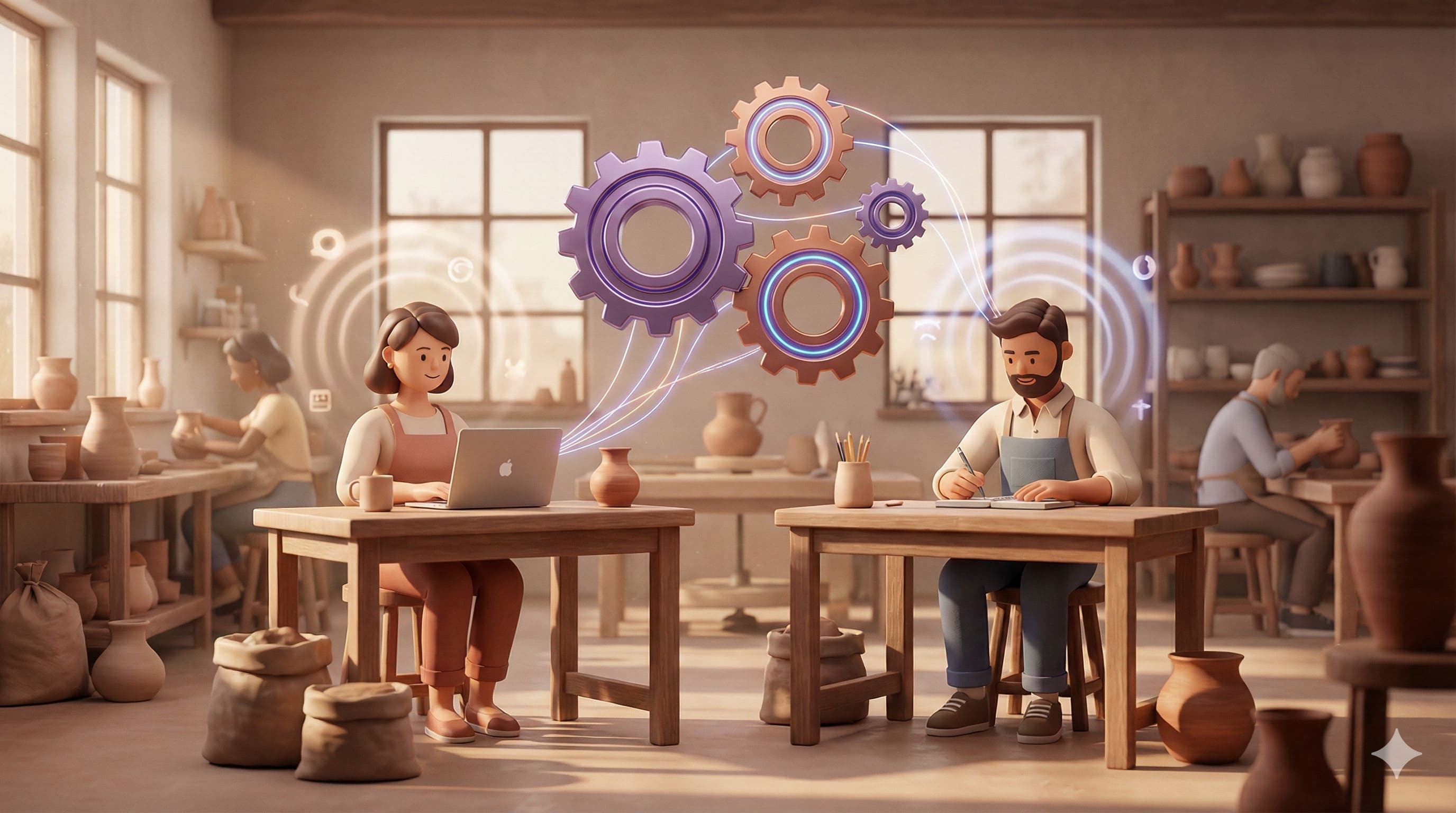
Body doubling is a focus-boosting tactic where you work on a task while another person is present - either in the same space or virtually. You don't necessarily collaborate or interact; what matters is their presence. It's especially well known in ADHD support communities, but many people find it helpful for increasing productivity, reducing distraction, and overcoming "start-up inertia."
How Does Body Doubling Work? #
- The presence of another person can help you stay on task. It introduces a gentle form of accountability and reduces the chance you'll veer off into distractions.
- Social facilitation plays a big part: when other people are doing work around you, it cues your brain to mirror that behaviour, helping you enter into a focused state.
- It helps tame attention drift. Instead of facing silence and distraction alone, having someone else there gives a structure to your session - whatever you two are doing.
- For many people with ADHD, body doubling helps with motivation and getting started. When tasks feel overwhelming or boring, simply having someone else nearby can make it easier to begin.
Who Can Be a Body Double? #
Anyone who is willing to quietly "be there" while you work can be a body double. Options include:
- A friend, family member or colleague working in the same room
- Someone in a coworking space or café
- A virtual partner on video or a call
- A peer from a focus-group or a doubling session organised specifically for this purpose
What matters is that they are working (or at least present) and not overly distracting.
Virtual vs Physical Body Doubling #
Both physical and virtual body doubling can work, with pros and cons:
Physical presence #
Pros: Stronger sense of shared space, fewer technical interruptions, more natural cues and fewer excuses.
Cons: Harder to coordinate, depends on environment and commute.
Virtual presence #
Pros: Flexible, easier to find someone to double with remotely, can be done from home.
Cons: Possible technical issues, distractions via phone/computer, and sometimes less anchoring effect.
How to Set Up a Body Doubling Session #
Here are ways to make the most of it:
- Agree on a time block (for example, 25, 50 or 60 minutes) - a Pomodoro session of 25 minutes works well as a starting point
- Define what tasks you both will work on (or at least what you want to get done)
- Keep interruptions to a minimum - agree to work silently and check in only at breaks
- If virtual: use video or audio so presence is clear
- Choose someone whose presence helps you stay focused, not someone who tends to distract you
Activities Suited to Body Doubling #
Body doubling works well for many kinds of tasks:
- Work or study (writing, coding, reading, reporting)
- Chores or household tasks (cleaning, sorting, paying bills)
- Exercise (working out alongside someone)
- Creative work - brainstorming, planning, sketching
What the Research and Reports Say #
- For people with ADHD, body doubling is often described as helpful in overcoming procrastination and difficulty starting difficult or boring tasks.
- Studies and expert commentary suggest it helps with executive functioning: attention, task initiation, and maintaining focus.
- It's not a magic fix - effectiveness varies depending on the person, their environment, the task, and the body double. What works for one person may not for another.
- Virtual body doubling is increasingly used, and anecdotal reports show people feel more accountable, less isolated, and more likely to complete tasks when using this method.
Tips to Make Body Doubling Effective #
Here are practical tips to get the most out of body doubling:
- Start with short sessions and grow: e.g. 25-minute blocks, then scale if it works.
- Pick tasks that need action - not ones that already feel easy, because the payoff is bigger when the task is something you'd otherwise avoid.
- Choose your double carefully: someone who is reasonably disciplined helps more than someone very distractible.
- Set up the environment: minimal distractions, good lighting, comfortable seating.
- Use virtual options when needed: video or audio presence, or structured doubling groups online.
- After sessions, review what helped and what broke your focus; tweak accordingly.
Who Might Body Doubling Be Less Useful For? #
- If you're very sensitive to others' presence or get distracted by someone else's work style.
- In noisy environments where external distractions outweigh the accountability benefit.
- If you require deep, uninterrupted time and find any presence - even quiet - distracting.
- If you try it but don't follow through with agreed structure (no goals, no tasks, no boundaries), it can fail.
Why It's Worth Trying #
Because body doubling is low cost, easy to try, and adaptable, exploring it can reveal surprising productivity gains. Even occasional use can help on days when motivation is hard. Over time, you'll find what form of body doubling works best - who works alongside you best, what environment helps most, and what timing suits your rhythms.
Plan a session this week - just 30 minutes - with someone else, or virtually. Combine it with time-blocking to protect that session in your calendar. Notice whether you finish more tasks, feel more focused, or procrastinate less. That first session might show you a simple change can make a big difference.
LD decision lens
Admin Waste Audit
Find repeated admin before designing a system
Use this when time is disappearing into data entry, chasing, duplicate work, rework, email threads, or manual reporting.
- Finding where admin time and attention are being wasted
- Prioritising the bottleneck before automating around it
- Building a business case for process or software work
Useful tools
Turn this idea into a next step
These free tools help you put rough numbers, priorities, or workflow shape around the problem before choosing software.
Pomodoro Timer
Use focused work sprints when the problem is attention, momentum, or context switching rather than software.
Open toolEisenhower Matrix
Sort work by urgency and importance so the next action is clearer before adding process or software.
Open toolTyping Speed Test
Check whether keyboard speed is a small but measurable productivity constraint in daily admin work.
Open toolQuick Questions
What is body doubling?
Body doubling is a focus-boosting tactic where you work on a task while another person is present - either in the same space or virtually. You don't necessarily collaborate or interact; what matters is their presence. It's especially popular in ADHD support communities but helps many people with productivity.
Why does body doubling work?
Body doubling works through social facilitation - when other people are doing work around you, it cues your brain to mirror that behaviour. It introduces gentle accountability, reduces attention drift, and for many people, simply having someone nearby makes it easier to start and stay on task.
Can body doubling work virtually?
Yes, virtual body doubling works well for many people. Using video or audio presence with someone else working remotely provides similar benefits to in-person doubling. Many find it flexible and easier to coordinate. Structured doubling groups are available online specifically for this purpose.
Who can be a body double?
Anyone willing to quietly 'be there' while you work: a friend, family member, colleague working in the same room, someone in a coworking space or café, a virtual partner on video call, or a peer from a focus group. What matters is they're present and not overly distracting.
Strategy next step
Turn the idea into a roadmap
If the article matches a problem in your business, start with a practical AI or technology roadmap before spending money on tools or development.
Other articles worth reading

AI & Automation
ChatGPT for NZ Small Business: A Practical Guide to Saving 5+ Hours a Week
ChatGPT isn't just for tech companies. Here's how NZ small business owners are using it to cut admin, write faster, and get more done.

Productivity
10 Quick Ways to Improve Productivity and Efficiency
Bite‑sized actions you can take right now to do more and do it better - improve both productivity and efficiency with simple, practical changes.

Productivity
Understanding the Difference: Productivity vs Efficiency and How to Improve Both
Productivity measures what you accomplish; efficiency measures how well you use resources. Discover strategies to improve both.