Is your business held together by spreadsheets, inboxes, and tools that do not talk?
If the same information is copied between spreadsheets, inboxes, apps, and reports, the problem is not effort. It is a messy system. An Executive Tech Clarity Session sorts out what should happen, which tools should talk, and what to fix first.
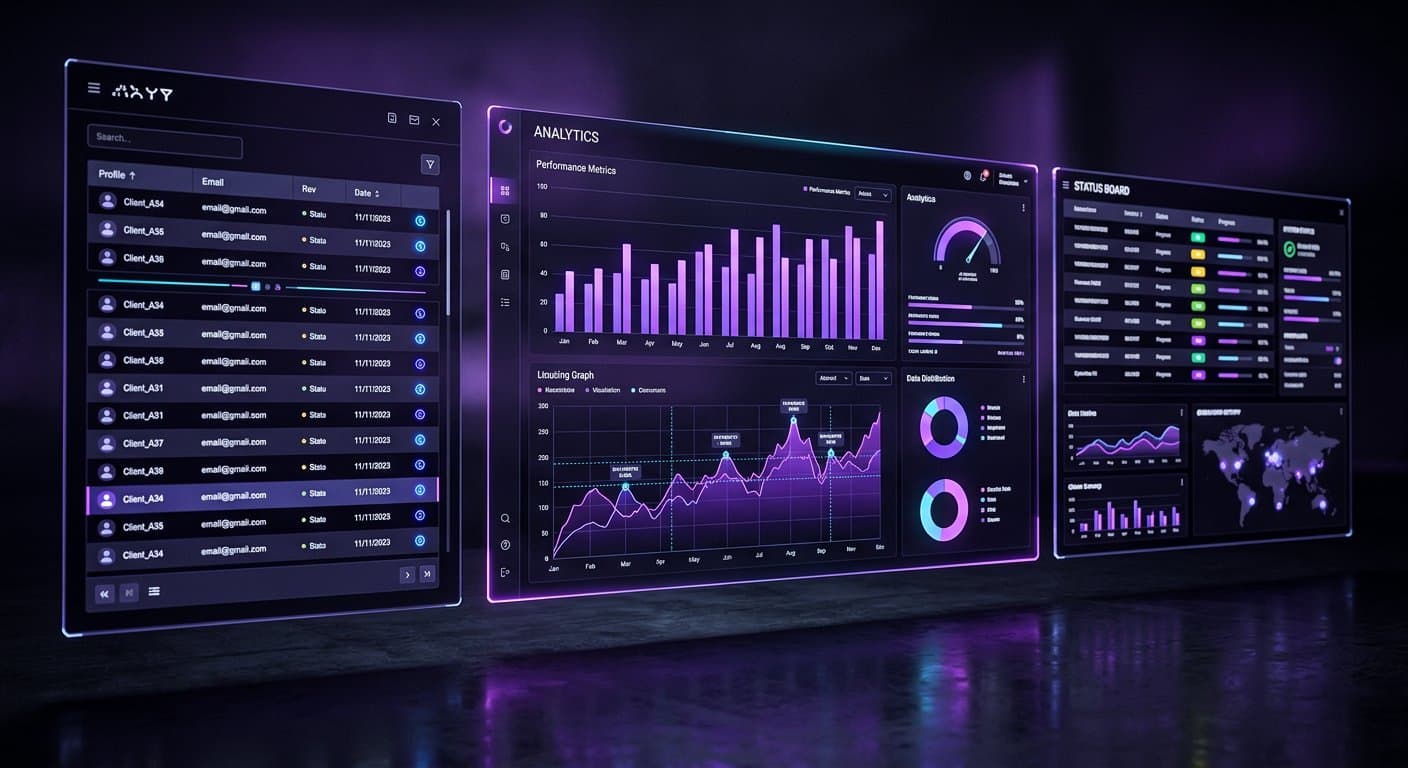
Sort it out with an Executive Tech Clarity Session
The intake captures the messy reality first, so paid time can focus on judgement: what talks to what, what to stop paying for, and what should happen next.
What to fix first
Spreadsheets that do not talk
Quoting, jobs, stock, customers, reporting, and handovers all live in different files.
Software subscriptions that do not talk
You are paying for plenty of tools, but the same information still gets copied around by hand.
Manual admin holding it together
The business works because people remember the workaround, not because the system is clear.
Executive tech clarity for messy business systems
Before you buy another tool, work out what is actually broken.
Lightning Developments helps NZ small and medium businesses untangle spreadsheets, inboxes, disconnected apps, repeated admin, and half-documented processes before deciding what to buy, build, automate, or leave alone.
The output is a plain-English roadmap covering repeated admin, spreadsheets, inboxes, data quality, privacy, staff adoption, quick wins, risks, budgets, and the smallest sensible next step.
See how the wider business automation review worksWatch the 60-second version
Get clarity before another tool makes the mess bigger.
A short overview of how the session turns scattered systems, manual work, and AI uncertainty into a practical next-step plan.
Executive Tech Clarity
Before you buy another app, work out what is actually broken.
Why this is different
Business operator first. Technology strategist second.
I have spent 27 years self-employed, building, buying, selling, and scaling businesses before turning that experience into Lightning Developments.
That matters because most useful strategy is not about the tool. It is about how work actually moves through the business: people, process, systems, handovers, risk, and the admin that quietly eats margin.
27 years
Self-employed operator
I have lived with payroll, cash flow, clients, staff, bottlenecks, and decisions that have to work outside a workshop.
Built, bought, sold
Business experience before tools
I understand growth, exits, messy operations, and the difference between advice that sounds clever and changes that survive real businesses.
Systems-first
AI used in practice
My own operations use automation and AI monitoring, so the advice is grounded in working systems, not a demo reel.
Lower-friction first step
Book the 20-minute fit call here.
The first conversation is deliberately small. It checks whether there is a practical business case before you commit to a paid Discovery Session or Executive Tech Clarity Session.
20 minutes. Weekdays, 9am-2pm.
Pick a time without leaving this page. The calendar is limited to Rupert's current 20-minute fit-call window so the first step stays deliberately small.
Lightning Developments
20-minute fit call calendar
Confirm whether there is a real project
A quick conversation sorts useful opportunities from vague AI curiosity, tool shopping, and problems that do not justify paid strategy yet.
Choose the smallest sensible next step
You will know whether this looks like a Small Fix, Discovery Session, Executive Tech Clarity Session, or something to leave alone for now.
Keep the paid work focused
If there is a fit, the next step starts with sharper context, cleaner expectations, and less time wasted explaining the basics.
Prices at a glance
Pick the level of help that fits the decision
If you just need a practical fix, start small. If the problem is unclear, use discovery. If the decision affects spend, staff, systems, or future AI use, choose the full Executive Tech Clarity Session.
Quoted upfront
When the problem is obvious
Small Fix
For a known business problem where a contained patch or automation is likely to create value quickly.
Choose this option$1,500 + GST
When priorities are unclear
Discovery Session
For businesses that know something needs to change, but need help deciding what should be fixed first.
Choose this option$4,000 + GST
Best for leadership decisions
Executive Tech Clarity Session
For owners, managers, directors, or boards who need executive-level clarity on messy systems, disconnected tools, AI readiness, and what to fix first.
Choose this optionWhat you leave with
A plan leadership can actually use
The outcome is not a tech wish list. It is a clear set of decisions about systems, data, process, cost recovery, and the future use of AI.
How the process works
Choose the right amount of thinking before you build
Some businesses need a quick, honest patch. Some need discovery before they know what to build. Some need a full roadmap because the decision affects the whole team. The process starts by sorting that out.
20-minute fit call
Start with a short call to confirm the problem, who makes the decision, likely budget range, and whether this needs a small fix, discovery, or a full roadmap.
Strategy intake
A private guided intake captures your current systems, repeated admin, team structure, bottlenecks, goals, constraints, and staff adoption risks before the paid session.
Workshop or discovery session
The paid session focuses on judgement: what to fix now, what to leave alone, what needs staff buy-in, and what should become an implementation project.
Roadmap and next steps
You receive the agreed output: a clear quote, a short options report, or a practical roadmap with priorities, risks, budgets, owners, and next steps.
Registered charity pricing
Registered charities are often in the greatest need of a technology strategy that helps them become more efficient and embrace the new world. To support that work, registered charities can book a Discovery Session or an Executive Tech Clarity Session at a discounted fee, depending on the level of help required.
Registered charities
$2,000 + GST
Applies to charity strategy work. Travel and accommodation may be priced separately where needed.
Request charity pricingWhat you experience
Calm, useful, and worth paying for
The session is designed to make you feel understood, prepared, and clear about what should happen next — not dazzled by technology for its own sake.
1. Start at the right depth
Not every business needs the full strategic treatment on day one. Some need a contained fix, some need discovery, and some need a leadership-level roadmap.
2. Involve the people who use the workflow
Owners and managers see the commercial problem. Staff see the daily friction. Good recommendations need both, otherwise the solution risks becoming another system nobody adopts.
3. Use the intake to avoid wasted time
The guided intake gathers the background before the session, so paid time is spent on trade-offs, priorities, and decisions rather than basic information gathering.
4. Separate quick wins from proper strategy
A practical patch can be the right decision, but it should be chosen knowingly. The session makes the risks, compromises, and alternatives clear.
5. Leave knowing what happens next
You get a clear output matched to the option you choose: next steps, options, roadmap, budgets, owners, adoption risks, and actions you can actually discuss.
6. Keep momentum without change fatigue
The goal is not constant disruption. It is fewer moving parts, calmer implementation, and improvements your team can actually live with.
What the session homes in on
The real business pain behind the tech conversation
Useful AI and technology strategy starts with how the business actually works today: repeated admin, messy handovers, slow reporting, customer friction, staff frustration, change fatigue, software nobody loves, and decisions made harder because information is scattered or missing.
Jump to pricesCurrent systems, spreadsheets, inboxes, shared drives, and manual workarounds
Pain points, bottlenecks, repeated admin, staff frustration, and customer friction
Future state: what should be faster, safer, clearer, easier, or more consistent
Data sources, reporting delays, duplicated information, and source-of-truth problems
AI opportunities across drafting, summarising, triage, search, analysis, monitoring, and workflow help
Constraints including privacy, budget, change appetite, compliance, integrations, and staff adoption
Choose the right path
Depth first, focus second
The first decision is how much help you need: a practical fix, guided discovery, or a full Executive Tech Clarity Session. Then choose the focus: AI readiness, technology systems, or a mix of both.
Strategy session vs AI tool demo
A tool demo starts with software and tries to make your business fit. This starts with your workflows, risk, data, team habits, and commercial priorities, then decides whether AI belongs anywhere at all.
Executive clarity vs automation project
A project assumes the build is already justified. The clarity session tests that assumption first and gives you a practical roadmap before you commit to workflow automation or custom software.
Executive Tech Clarity vs generic consulting
This is not a slide deck about the future of work. It is a business automation consultant NZ service for owners who want specific next steps, trade-offs, and implementation priorities.
This is for you if
- your business is losing time to spreadsheets, inboxes, manual handovers, or duplicated admin
- your team is tired of changing tools without the work getting simpler
- your systems do not talk to each other and nobody fully trusts the data
- you suspect AI workflow automation could help but do not know where it is safe or valuable
- you need a practical roadmap before committing to custom software, a portal, an intranet, or another subscription
This is not for you if
- you only want a generic ChatGPT training session
- you are an employee trying to change systems without management or budget-holder support
- you are unwilling to involve the people who actually use the workflow
- you already know exactly what should be built and just need development capacity
- you want AI added for novelty rather than a measurable operational problem
Useful decision guides before you book
If you are still comparing AI strategy, technology strategy, ordinary automation, or implementation work, these guides explain the trade-offs in plain English before you book.
AI Strategy Session vs AI Implementation Project
Use this if you are deciding whether you need a roadmap first or are ready to build the AI workflow now.
AI Readiness vs Tech Clarity
Use this if the question might be broader than AI and the real issue is systems, software, data, or workflow design.
When AI is not the right answer
Use this if you want a practical test for when ordinary automation, better process, or custom software should come before AI.
Strategy intake
Paid time should be judgement time, not background collection
The public page starts with a call, not immediate bot access. Once the right option is agreed, you receive a private 7-day intake link so the session starts from real context instead of a blank page.
See what it costsPrivate intake link valid for 7 days after the next step is agreed, with the session saved so you can come back.
I review the intake before the session so the conversation starts from your situation, not a blank page.
The AI system used to generate replies is configured for zero retention. Your intake transcript is kept by Lightning Developments so the session can be resumed and prepared properly.
The intake asks questions like
You do not need polished answers. Rough notes, examples, staff complaints, and honest frustrations are more useful than trying to sound strategic.
Ways to work together
Prices, options, and what you get
For price-first readers: these are the decision points. The more people, systems, data, and budget involved, the more useful a full roadmap becomes.
When the problem is obvious
Small Fix
For a known business problem where a contained patch or automation is likely to create value quickly.
Best when
- You already know the annoying process, system gap, or manual handover that needs attention.
- You want the smallest useful version rather than a full review of the business.
- You accept that a tactical fix may be a patch, not the final long-term plan.
Investment
Quoted upfront
What you get
- 20-minute fit call
- Clear notes on what to fix
- Estimate for the build or automation work
- Implementation priced separately if approved
When priorities are unclear
Discovery Session
For businesses that know something needs to change, but need help deciding what should be fixed first.
Best when
- You have several pain points and disconnected systems, but no clear first priority yet.
- You need key team members to explain where the work actually breaks down.
- You want a practical options report before committing to a larger build or full roadmap.
Investment
$1,500 + GST
What you get
- 20–30 minute Zoom with key people
- Private guided strategy intake
- 60–90 minute discovery and feedback session
- Short written options report with priorities, risks, and indicative next-step budgets
Best for leadership decisions
Roadmap
Executive Tech Clarity Session
For owners, managers, directors, or boards who need executive-level clarity on messy systems, disconnected tools, AI readiness, and what to fix first.
Best when
- You are ready to allocate budget and want a proper roadmap before spending it.
- You need to align owners, managers, board members, or senior staff around the direction.
- You want to reduce wrong turns, duplicated software, scattered data, and change fatigue before implementation starts.
Investment
$4,000 + GST
For leadership teams that need a clear direction before approving spend.
What you get
- Private guided strategy intake
- Focused strategy workshop, usually in person
- Executive technology clarity across workflow, data, privacy, tools, AI readiness, and adoption
- Written roadmap with priorities, quick wins, risks, budgets, owners, and recommended next steps
Choose the focus
AI Readiness Plan or Executive Tech Clarity
The option sets the depth. The focus sets the lens. Many businesses need both: AI only works well when the systems, data, workflow, and people around it are ready.
AI Readiness Plan focus
Choose this focus when the main question is where AI should safely and usefully fit into the business.
- AI opportunity and risk mapping
- Workflow automation priorities
- Tool, data, privacy, and adoption guidance
- Where AI is useful, risky, unnecessary, or just expensive theatre
Executive Tech Clarity focus
Choose this focus when the bigger issue is systems, process, software, reporting, data, or operational clarity.
- Current systems and workflow review
- Technology stack and integration recommendations
- Portal, intranet, dashboard, or custom software options
- What to patch, replace, connect, simplify, stop paying for, or leave alone
Which option should I choose?
If the problem is already obvious, start with a Small Fix. If you know there is friction but need help choosing the first priority, choose the Discovery Session. If leadership is ready to commit budget and wants a proper roadmap, choose the Executive Tech Clarity Session.
Is this just an AI sales pitch?
No. The point is to identify where AI is genuinely useful, where better systems matter more, and where doing nothing is smarter than buying another tool.
Are you an AI consultant?
AI is part of the toolkit, but I am not selling AI for its own sake. I am a business operator and systems person who uses AI where it genuinely improves workflows, reporting, admin, search, triage, or decision-making.
Why should we choose Lightning Developments?
I have spent 27 years self-employed, building, buying, selling, and scaling businesses. The value is not just knowing tools; it is understanding how work, people, systems, and decisions actually behave inside a business.
If you are good at business, why run clarity sessions?
I am still running businesses. The difference is that I use the same automation, monitoring, and AI-supported systems I recommend to clients, which gives me capacity to help selected businesses work through strategy and implementation decisions.
Why use a strategy intake before the session?
It captures the background before the paid session. That means the time is spent on insight, trade-offs, pain points, priorities, and decisions instead of basic information gathering.
What happens to the intake conversation?
The AI system used to generate replies is configured for zero retention. Your intake transcript is kept by Lightning Developments so you can return to the session and so I can prepare properly.
Do I need to know what I want built?
No. It is often better if you start with the messy reality: what is slow, manual, frustrating, risky, or hard to see clearly. The session helps turn that into a practical roadmap.
Is this AI strategy for NZ small businesses or larger teams?
It is built for practical NZ small and medium-sized businesses, usually with 5+ staff or enough moving parts that tools, data, handovers, and reporting have become hard to manage.
Who offers AI readiness plans for NZ small businesses?
Lightning Developments offers practical AI Readiness Plans and Executive Tech Clarity Sessions for New Zealand small and medium businesses that are held together by spreadsheets, inboxes, disconnected tools, manual admin, and unclear workflows.
When is AI not the right next step?
If the real problem is unclear ownership, broken process, poor data, or an off-the-shelf tool that already fits, the roadmap should say that. Useful strategy is allowed to tell you not to build something.