
Productivity
10 Quick Ways to Improve Productivity and Efficiency
Bite‑sized actions you can take right now to do more and do it better - improve both productivity and efficiency with simple, practical changes.

Use a small practical exercise to apply the ideas in this guide. Try the Pomodoro timer.
Key takeaways
- Time-block your day to reduce context switching and focus on one type of task at a time
- Use the two-minute rule: if it takes less than two minutes, do it immediately
- Automate repetitive tasks with tools like Zapier to free up time for higher-value work
- Batch similar tasks together (emails, data entry, scheduling) to save transition time
- Schedule breaks - efficient work isn't non-stop effort; rest prevents errors and burnout
1. Time-block your day #
Divide your workday into dedicated blocks (for example: deep work, admin, meetings). Time-blocking helps you focus on one type of task in each block, reducing context switching and making you more efficient.
2. Use the Two-Minute Rule #
If a task (or email) will take two minutes or less, do it immediately. This prevents small jobs from piling up and eating time later.
3. Set SMART goals #
Specific, Measurable, Achievable, Relevant, and Time-bound goals help give direction and make it easier to track both output (productivity) and resource use (efficiency).
4. Automate repetitive tasks #
Use automation tools (Zapier, Make.com, email rules, templates) to handle routine work. Automation frees up mental space and time for higher-value tasks.
5. Batch similar tasks together #
Combine tasks of the same type - replying to emails, entering data, scheduling - in one go rather than interspersing them throughout the day. Saves on transition time.
6. Minimise distractions #
Turn off notifications, close unnecessary browser tabs or apps, set "focus mode" or "do not disturb" during your highest-energy times.
7. Review and refine workflows #
Periodically audit how you're working: what tasks take too long, where are delays, what tools or steps are redundant. Remove or streamline those inefficiencies.
8. Prioritise ruthlessly #
Use techniques such as the Eisenhower Matrix (urgent-important) or the 80/20 rule: focus on the 20% of tasks that deliver 80% of value.
9. Schedule rest and breaks #
Efficient work isn't about non-stop effort. Techniques like the Pomodoro Technique build short breaks into your workflow, helping maintain high performance with fewer errors and less burnout.
10. Measure both output and resource usage #
Track not just what you deliver (tasks done, projects completed) but also how much time, effort, cost or tools were used. A solid to-do list can help you visualise what's been accomplished and where efficiency can improve without reducing productivity.
A useful companion: Pomodoro Timer.
Quick Questions
What are the quickest ways to boost productivity?
Time-block your day for focused work, use the two-minute rule for small tasks, set SMART goals, batch similar tasks together, and minimise distractions by using focus mode and turning off notifications during high-energy periods.
How can I become more efficient at work?
Automate repetitive tasks with tools like Zapier or email rules, periodically audit your workflows to remove bottlenecks, prioritise ruthlessly using the Eisenhower Matrix or 80/20 rule, and measure both what you deliver and how much time and effort it takes.
Should I focus on productivity or efficiency first?
It depends on your situation. If you're not getting enough done, focus on productivity (setting goals, prioritising). If you're busy but exhausted, focus on efficiency (streamlining, automating). Ideally, improve both together for sustainable high performance.
Why are scheduled breaks important for efficiency?
Efficient work isn't about non-stop effort. Short breaks and rest periods help maintain high performance, reduce errors, and prevent burnout. A rested mind works faster and makes fewer mistakes than an exhausted one pushing through.
Other articles worth reading
Productivity
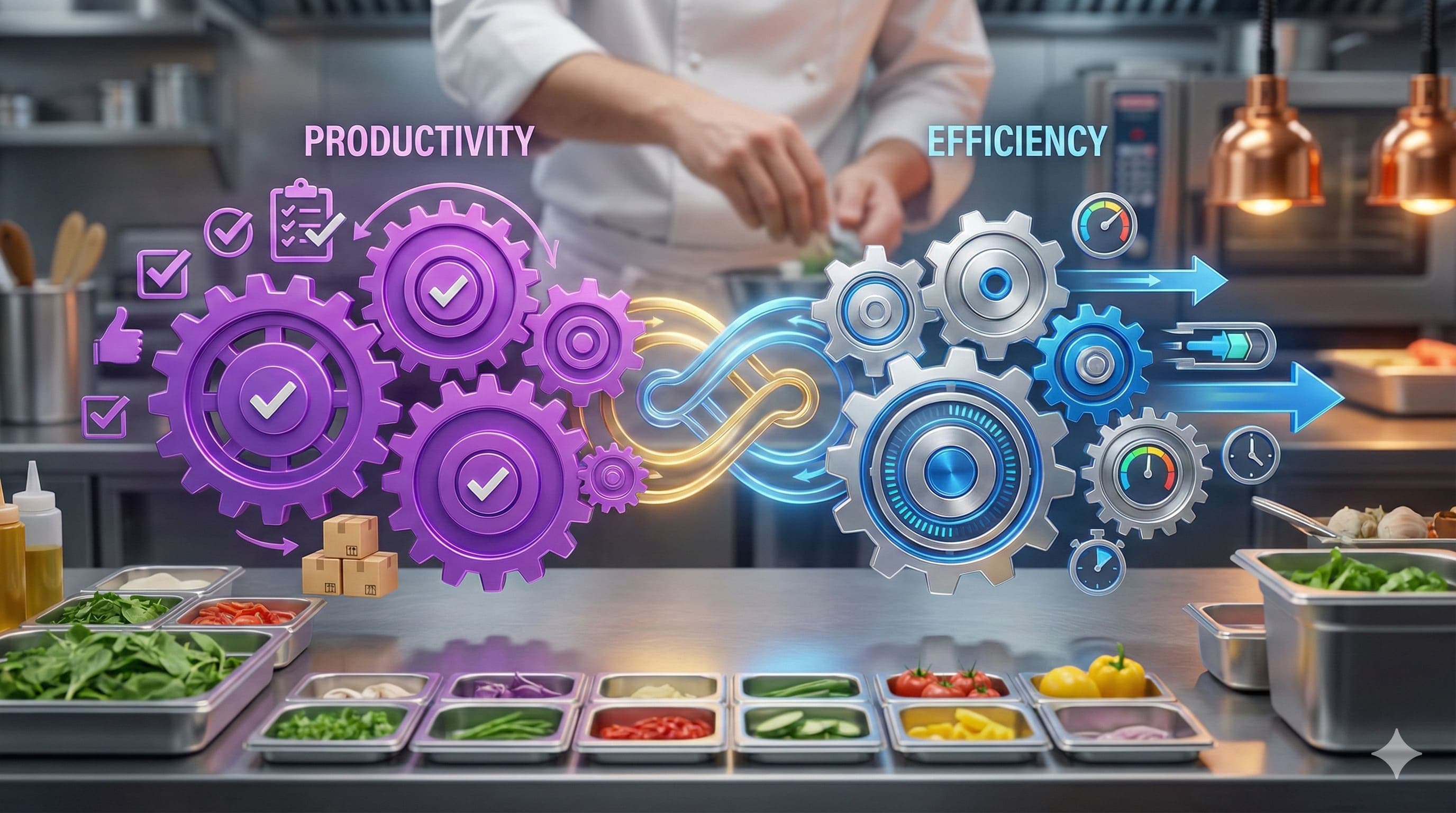
Understanding the Difference: Productivity vs Efficiency and How to Improve Both
Productivity measures what you accomplish; efficiency measures how well you use resources. Discover strategies to improve both.

AI & Automation
ChatGPT for NZ Small Business: A Practical Starting Guide
Start with a low-risk drafting or summarising task, check the result and measure the benefit. Useful AI adoption depends on your work, not a promised weekly time saving.

Productivity
Easy Wins: Using Zapier to Automate Admin Tasks
Connect your apps to remove repetitive tasks and free up time. Straightforward Zapier automations for admin and business workflows.