
Productivity
Understanding the Difference: Productivity vs Efficiency and How to Improve Both
Productivity measures what you accomplish; efficiency measures how well you use resources. Discover strategies to improve both.
Use a small practical exercise to apply the ideas in this guide. Try the Pomodoro timer.
Key takeaways
- Productivity measures how much you accomplish; efficiency measures how well you use your resources
- High productivity without efficiency leads to burnout; high efficiency without productivity means getting little done
- The ideal state combines both: accomplishing meaningful work while minimising wasted time, effort, and resources
- Automation and streamlined processes boost efficiency, while clear goals and prioritisation drive productivity
- Measure both output (tasks completed) and resource usage (time, cost) to find the right balance
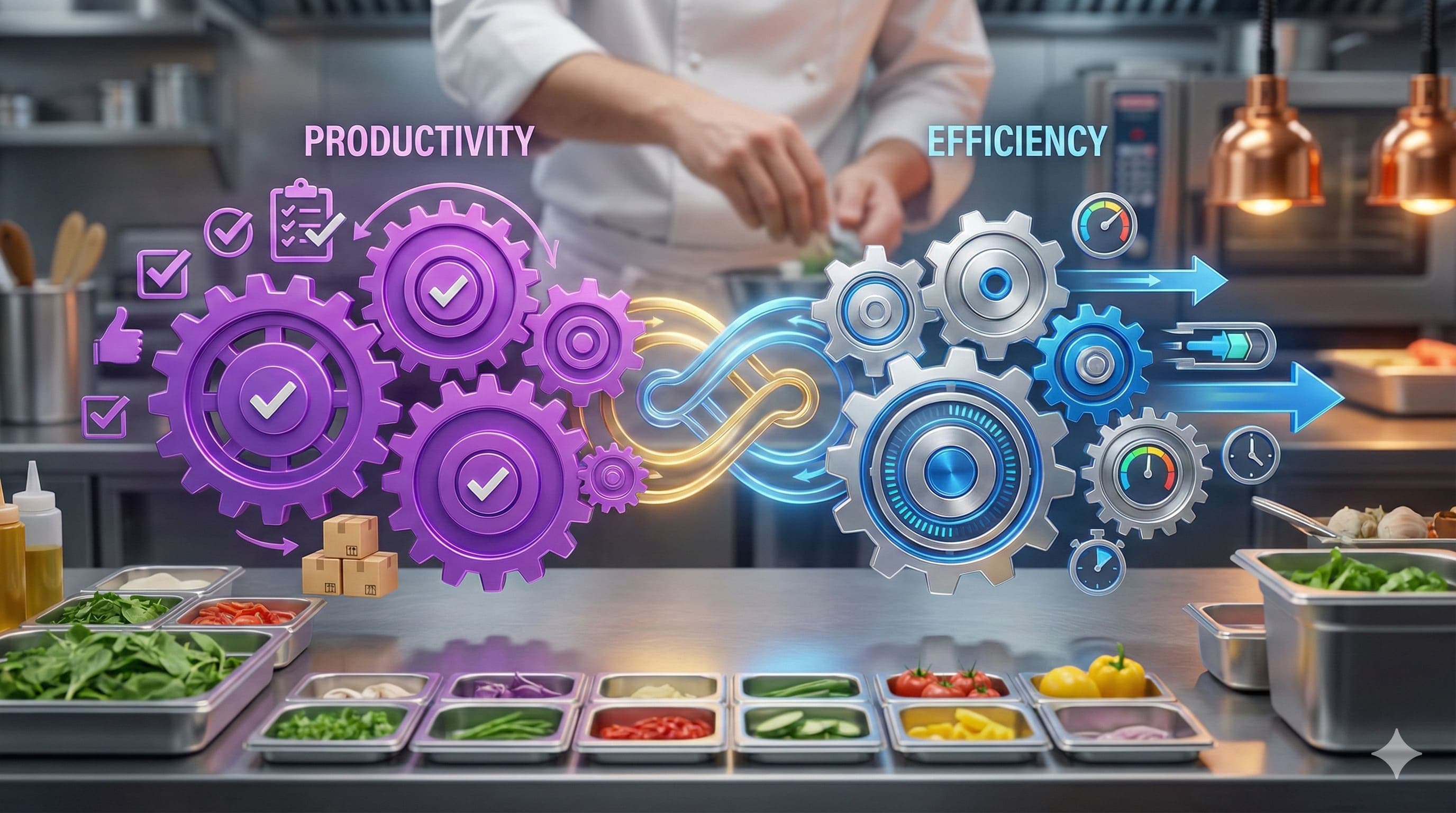
People often use productivity and efficiency as though they mean the same thing. However, while closely related, they focus on different aspects of performance. Understanding both allows you to not only do more, but to do better.
What Is Productivity? #
Productivity measures how much you accomplish in a given period of time using your available resources. It asks the question: how many outputs or tasks are you completing relative to the inputs (time, effort, tools) you invest.
For example: if you have ten tasks due in a week and you complete all ten, you've been productive. If you get through fifteen, even better. However, simply increasing quantity doesn't always lead to value unless what you do aligns with what matters.
What Is Efficiency? #
Efficiency, on the other hand, is about the relationship between your resources used and the outcome achieved. It's less about quantity and more about how well you use what you have. Efficiency asks: are you minimising waste (of time, energy, tools)? Are you organising your process so that the same or better result is possible with fewer inputs?
For instance, completing those same ten tasks but doing so in six hours instead of eight means you have increased your efficiency. You have used less time to achieve the same result.
Key Differences Between Productivity and Efficiency #
Here are some ways to distinguish between the two:
| Aspect | Focus of Productivity | Focus of Efficiency |
|---|---|---|
| What is being measured | Volume of tasks or outputs over time | Quality of process, resource waste, speed vs resource input |
| Common trade-off | Doing more (possibly with more effort or resources) | Doing things better, optimally, possibly doing fewer tasks but with more impact |
| Risks if unbalanced | Burn-out, poor quality, unfinished tasks, diminishing returns | Over-optimisation (cutting corners), inertia (too cautious), possibly less output if efficiency becomes obsession |
| Ideal state | High productivity and high efficiency | High efficiency with sufficient output to meet goals |
Insights from business and productivity thinkers reinforce that while productivity gets you moving, efficiency sustains you (or the organisation) over time.
Why Both Matter #
Sustainability Through Balance #
Doing lots of work matters, but if you're wasting time, money or energy, it isn't sustainable. High productivity without efficiency leads to burnout and resource depletion. You need both to maintain long-term performance.
Quality Over Quantity #
Producing fast or in volume is great, but if the output suffers, the cost may outweigh the benefit. Efficient processes help maintain quality whilst productive approaches ensure sufficient output to meet goals.
Scalability for Growth #
Efficient systems and workflows make scaling up possible without exponentially increasing resources. When processes are streamlined, adding more work doesn't require proportionally more effort or cost.
Well-being and Performance #
Higher efficiency often means less friction, less stress, and more time for rest, which helps maintain long-term productivity. Sustainable performance requires both effective output and optimised processes.
Ways to Improve Productivity #
Here are some strategies to boost how much you get done:
1. Set SMART Goals #
Specific, Measurable, Achievable, Relevant, Time-bound goals give clarity. Instead of "do more," try "finish report draft by Wednesday at 5pm," or "reach out to 10 new leads by end of week."
2. Prioritise Wisely #
Use tools like the Eisenhower Matrix: urgent vs important, to decide what to act on now vs schedule vs delegate vs discard.
3. Break Tasks into Smaller Steps #
Large projects can feel overwhelming. Splitting into smaller tasks makes progress easier to visualise, momentum easier to build.
4. Use a Task Management Tool #
Tools such as Todoist, Microsoft To Do, or Trello help track what needs doing, when, and let you see progress. They reduce mental overhead: you don't have to remember everything.
5. Time-blocking or Batching #
Block out chunks of time where you only focus on certain kinds of work (e.g. creative work, admin, deep thinking), instead of constantly switching context.
Ways to Improve Efficiency #
Improving efficiency tends to deliver quick wins - sometimes referred to as picking the low-hanging fruit. Here are approaches:
1. Analyse and Remove Bottlenecks #
Identify the slow steps in your workflows - maybe approvals take too long, or information isn't gathered properly before tasks begin. A structured bottleneck analysis can help you pinpoint exactly where delays occur so you can fix those.
2. Reduce Distractions and Interruptions #
Turn off unnecessary notifications, set "do not disturb" periods, reduce context switching. A focussed hour is often more efficient than two fragmented ones.
3. Leverage Automation & Tools #
Automate repetitive tasks: email filtering, scheduling tools, standard templates. Use software or scripts to reduce manual steps. Efficiency gains often come here, and understanding how to calculate the ROI of automation helps you justify the investment. Support from tools like Zapier, Make.com, or internal tools makes a difference.
4. Use the Two-Minute Rule #
If something can be done in two minutes or less, do it immediately rather than deferring. This stops small tasks from piling up.
5. Continuous Review and Feedback Loops #
Occasionally review what tasks are taking longer than expected. Ask: is there a better way? Adapt tools, processes, or habits accordingly.
Real-World Examples #
Sales Team Optimisation #
A sales team might aim to increase productivity by making more sales calls per day. However, they improve efficiency by using call templates, scheduling tools, and automating follow-ups. This makes each call more effective whilst reducing preparatory work.
Content Creation Balance #
An individual writer might try to write more articles for productivity. But they improve efficiency by creating writing templates, having outlines ready, using voice dictation, or employing tools to proofread and format faster.
Customer Support Enhancement #
A customer support team could resolve more tickets per day for productivity. However, they become far more efficient by employing smart triage, canned responses, and routing high-volume queries so agents focus on what matters most.
Balancing Productivity and Efficiency #
Often, efforts to boost one can hurt the other if not managed carefully. The key is finding the right balance for sustainable performance.
Common Imbalances to Avoid #
Trying to maximise productivity by working long hours might reduce efficiency because fatigue undermines quality. Conversely, optimising for efficiency through over-planning can slow down action and reduce overall output if taken too far.
Strategies for Balance #
To strike the right balance, periodically measure both how much you've done (productivity) and how well you used your time or resources (efficiency). Use metrics that capture both sides, such as tasks completed versus time spent, or revenue achieved versus cost and time input.
Building Sustainable Systems #
Build habits and lean processes that support fast delivery whilst minimising waste. This creates a foundation where productivity and efficiency reinforce each other rather than compete.
Tips to Implement Both at Once #
Start With High-Value Tasks #
Begin your day by deciding on three "highest value" tasks and do those first. This ensures your most productive energy is directed toward what matters most whilst using your time efficiently.
Automate Repetitive Work #
Automate anything repetitive you do more than once a week. This frees up time for more productive work whilst eliminating inefficient manual processes.
Create Deep Work Blocks #
Set certain hours as deep work time with no meetings or distractions. This maximises efficiency by reducing context switching whilst boosting productivity through focused effort.
Regular Review and Adjustment #
Reflect weekly on what took longer than expected and where resources were wasted, then adjust accordingly. Use technology like dashboards to track output and tools that show where time goes.
Potential Pitfalls to Watch #
Output-Only Focus #
Measuring output alone can lead to burnout or cutting corners. Without considering how resources are used, high productivity becomes unsustainable.
Efficiency Obsession #
Efficiency obsession without regard to results can lead to doing "busy work" neatly whilst missing what really matters. Optimisation must serve meaningful outcomes.
Over-Automation Risks #
Over-automation can backfire if tools are misconfigured or maintenance overhead is hidden. Technology should simplify, not complicate your workflows.
Perfectionism Paralysis #
Perfectionism can kill productivity. Sometimes "good enough" is the best way to move forward, especially when efficiency and speed matter more than perfect execution.
If you begin to think of productivity and efficiency as complementary rather than competing, you find space not only to achieve more, but to enjoy better quality and sustainable performance.
A useful companion: Automation ROI Calculator.
Quick Questions
What's the difference between productivity and efficiency?
Productivity measures how much you accomplish in a given time - the volume of tasks or outputs. Efficiency measures how well you use resources - minimising waste while achieving results. You can be productive (doing lots) but inefficient (wasting time), or efficient (optimised process) but unproductive (low output).
How can I improve productivity?
Set SMART goals (Specific, Measurable, Achievable, Relevant, Time-bound), prioritise using frameworks like the Eisenhower Matrix, break large tasks into smaller steps, use task management tools, and try time-blocking to reduce context switching.
How can I improve efficiency?
Identify and remove bottlenecks in your workflows, reduce distractions and interruptions, automate repetitive tasks using tools like Zapier, apply the two-minute rule for quick tasks, and regularly review processes to find improvements.
Why do I need both productivity and efficiency?
Productivity gets things done, but without efficiency it's unsustainable and leads to burnout. Efficiency optimises how you work, but without productivity you don't produce enough. Together, they enable sustainable high performance with quality output.
Other articles worth reading

Productivity
10 Quick Ways to Improve Productivity and Efficiency
Bite‑sized actions you can take right now to do more and do it better - improve both productivity and efficiency with simple, practical changes.

AI & Automation
ChatGPT for NZ Small Business: A Practical Starting Guide
Start with a low-risk drafting or summarising task, check the result and measure the benefit. Useful AI adoption depends on your work, not a promised weekly time saving.

Productivity
Easy Wins: Using Zapier to Automate Admin Tasks
Connect your apps to remove repetitive tasks and free up time. Straightforward Zapier automations for admin and business workflows.