
Efficiency
Data Management
Why Your Spreadsheets Are Costing You Money: The Hidden Cost of Disconnected Data
Manual processes and isolated spreadsheets create hidden costs through wasted labour, missed opportunities, and preventable errors.

Quick answer
Spreadsheets start costing money when they become the place where workflow, approvals, reporting, permissions, and business-critical data all live at once. The cost usually shows up as duplicate entry, rework, missed follow-ups, version confusion, and staff time spent checking whether the data can be trusted.
- One spreadsheet is a tool.
- Many linked spreadsheets become a fragile system.
- Move the riskiest workflow first.
Put your business technology questions into a broader roadmap that reflects your business goals and the resources available. Explore Tech Clarity.
Key takeaways
- Disconnected spreadsheets create a 'hidden tax' on your operations paid in wasted labour, missed opportunities, and preventable errors
- Manual double-handling of data across systems costs hundreds of hours annually, essentially paying staff to act as human interfaces between software
- Human error in manual data entry leads to revenue leakage, inventory mistakes, and damaged client relationships that compound over time
- Stale information from spreadsheets means navigating your business through fog -reacting to problems instead of preventing them
- Modern automation solutions connect your existing tools into a 'single source of truth' without requiring a massive enterprise overhaul
For many small to medium enterprises in New Zealand, the spreadsheet is a familiar comfort. It is the digital Swiss Army knife used for everything from rostering staff and tracking inventory to managing customer relationships and forecasting cash flow. It feels free, flexible, and entirely under your control. However, as your business grows, this reliance on disparate spreadsheets often transforms from a helpful tool into a significant financial liability.
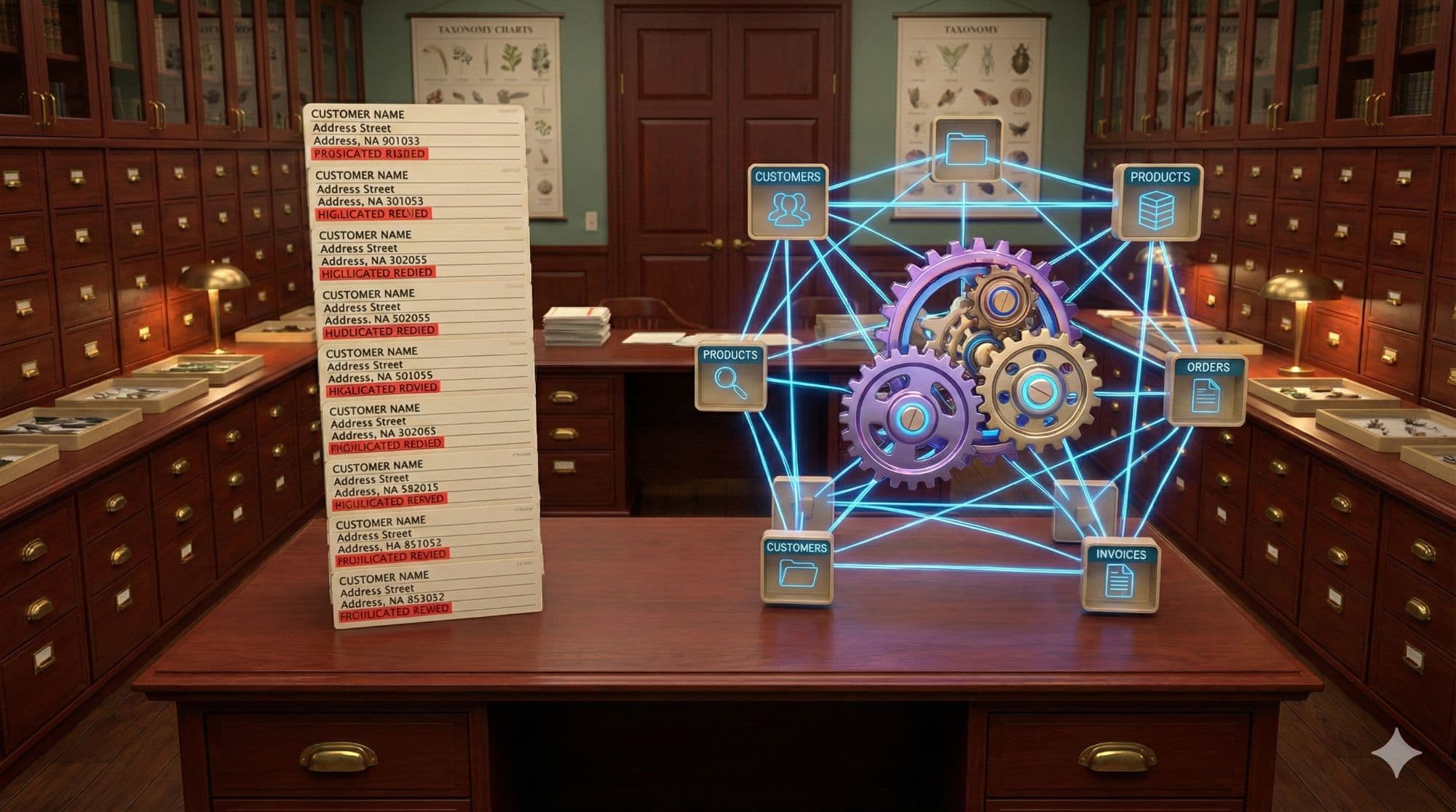
The issue is not the spreadsheet itself but the disconnected nature of the data it holds. When critical business information lives in static, isolated files rather than a unified system, you inadvertently create a "hidden tax" on your operations. This tax is paid in wasted labour hours, missed opportunities, and preventable errors that directly impact your profitability. Understanding these costs is the first step toward reclaiming the efficiency your business deserves.
The True Cost of Manual Double-Handling #
The most immediate financial drain caused by disconnected data is the sheer volume of human effort required to manage it. Consider the typical workflow in many Kiwi businesses: a sales order comes in via email, a staff member manually enters it into an accounting system, another person updates an inventory spreadsheet, and perhaps a third updates a production schedule. Each of these steps is a manual transcription of the exact same data.
This duplication of effort is more than just a nuisance; it is a measurable labour cost. If a skilled employee spends ten hours a week manually moving data between systems or reconciling conflicting spreadsheets, that is hundreds of hours annually that could have been spent on revenue-generating activities. You are essentially paying talented people to act as human interfaces between software that should be talking to each other. When you calculate the hourly rate of your team against the time spent on this "data janitor" work, the annual cost often rivals the price of the automation solutions that could eliminate the problem entirely.
The High Price of Human Error #
Beyond the predictable cost of labour lies the unpredictable and often far more damaging cost of error. Manual data entry is inherently fragile. A fatigued staff member might mistype a SKU, transpose a figure in a pricing column, or accidentally overwrite a complex formula that drives your job costing. In a disconnected spreadsheet environment, these errors can go undetected for weeks or months because there is no system validation to catch them. Our article on common manual data entry mistakes explores these pitfalls in detail.
The consequences of such errors ripple outward. An incorrect stock level in a spreadsheet might lead you to turn down a customer order because you believe you are out of stock, or conversely, accept an order you cannot fulfil, damaging your reputation. In more severe cases, billing errors born from manual calculations can lead to significant revenue leakage or uncomfortable disputes with long-term clients. Unlike a unified software ecosystem where data is validated and synchronised in real-time, spreadsheets rely entirely on human vigilance, which is a fragile safeguard for your financial health.
The Opportunity Cost of Stale Information #
Perhaps the most insidious cost of disconnected data is the inability to make timely, informed decisions. In a dynamic business environment, speed is a competitive advantage. However, if you rely on spreadsheets, your view of the business is always looking in the rearview mirror. By the time you have collated data from sales, operations, and finance, checked it for errors, and produced a report, the information is often days or weeks out of date.
This lag creates a paralysis where you react to problems rather than preventing them. You might miss a trend in rising material costs until it has already eroded your margins for the quarter, or fail to spot a decline in customer retention until it is too late to intervene. Real-time data visibility allows you to pivot quickly, optimising pricing, adjusting stock levels, or reallocating resources on the fly. Consider building your first business dashboard to get this real-time view of your operations. Sticking with static spreadsheets means you are effectively navigating your business through a fog, missing out on agility that could drive growth.
Transforming Operations with Intelligent Automation #
The transition away from spreadsheet dependency does not require a massive enterprise-level overhaul. Modern automation and AI solutions are increasingly accessible to SMEs, allowing you to link your existing tools such as Xero, your CRM, and your inventory management into a cohesive ecosystem.
By implementing these connected solutions, you create a "single source of truth" for your business. An order placed online can automatically trigger an invoice, update inventory levels, and schedule a dispatch courier without a single keystroke from your team. This shifts your business from a reactive state of manual data management to a proactive state of strategic oversight. Your team is freed from the drudgery of data entry to focus on high-value tasks like customer service and business development, while your data becomes a reliable asset rather than a liability. Want to calculate the real impact of these changes? Try our automation ROI calculator to quantify potential savings.
Take the Next Step Toward Efficiency #
If you recognise your own business in the descriptions of spreadsheet fatigue and disconnected data, it is time to explore a better way of working. You do not need to overhaul your entire operation overnight, but you do need to start closing the gaps where money and time are leaking out.
For more on organising your business data, see our guide on sorting your data out. And if you want to understand how these hidden costs affect your team's wellbeing, read about the cognitive fatigue caused by poor systems.
A useful companion: Spreadsheet Replacement Checklist.
Quick Questions
Why are spreadsheets costing my business money?
Spreadsheets create hidden costs through manual double-handling (staff entering the same data into multiple systems), human errors (mistyped figures, overwritten formulas), and stale information that prevents timely decisions. These costs often exceed the price of automation solutions that could eliminate them.
How much time does manual data entry actually waste?
If a skilled employee spends ten hours weekly moving data between systems or reconciling spreadsheets, that's hundreds of hours annually diverted from revenue-generating activities. When you calculate their hourly rate against this 'data janitor' work, the cost often rivals automation solutions that could eliminate it entirely.
What errors occur from disconnected spreadsheet data?
Common errors include mistyped SKUs, transposed pricing figures, and accidentally overwritten formulas. These can go undetected for weeks because there's no system validation. Consequences include turning down orders (thinking you're out of stock), accepting orders you can't fulfil, billing errors, and revenue leakage.
How does stale data affect business decisions?
Spreadsheet data is always looking backward -by the time you've collated, checked, and reported, information is days or weeks old. You miss rising material costs until they've eroded margins, or decline in customer retention until it's too late to intervene. Real-time visibility enables quick pivots that drive growth.
Do I need a massive IT project to fix this?
No. Modern automation and AI solutions are increasingly accessible to SMEs. You can link existing tools -like Xero, your CRM, and inventory management -into a cohesive ecosystem. An order can automatically trigger an invoice, update inventory, and schedule dispatch without any manual keystroke.
Other articles worth reading

Efficiency
Manual Data Entry: Common Mistakes That Slow Down Your Business
Manual data entry kills productivity through inconsistent formatting, delays, human errors, and duplicate work across disconnected systems.

Efficiency
The First Step to Business Efficiency: Sort Your Data Out
Before investing in new software, fix the foundation: disconnected spreadsheets that slow everything down.
Efficiency
Your Business Brain: Understanding Databases Without the Jargon
Move beyond spreadsheets to scale efficiently. A database is your business's central nervous system for customer data and decisions.