Efficiency
Workplace Systems
The Hidden Cost of Poor Systems: Cognitive Fatigue in the Workplace
Poor systems drain mental energy through small daily friction points. Recognise and address this invisible tax on your team's productivity.
Put your business technology questions into a broader roadmap that reflects your business goals and the resources available. Explore Tech Clarity.
Key takeaways
- Cognitive fatigue is the accumulation of dozens of small friction points -logging in, finding files, remembering processes
- People adapt to poor systems and can't articulate why they're tired; the problems become invisible through familiarity
- Being busy isn't the same as being effective -much time is spent on 'meta-work' (work about work) rather than actual work
- Cognitive fatigue leads to errors, lack of creativity, and staff turnover that rarely gets attributed to systems
- Small improvements compound: single sign-on, clear file structures, and standardised processes preserve mental energy
When businesses talk about efficiency improvements, the conversation typically focuses on time saved and costs reduced. These are tangible metrics that look good in reports and justify investment decisions. But there's another cost that rarely makes it into these discussions: the daily cognitive fatigue that poor systems inflict on your team. It's not dramatic or obvious, which is precisely why it's so insidious.
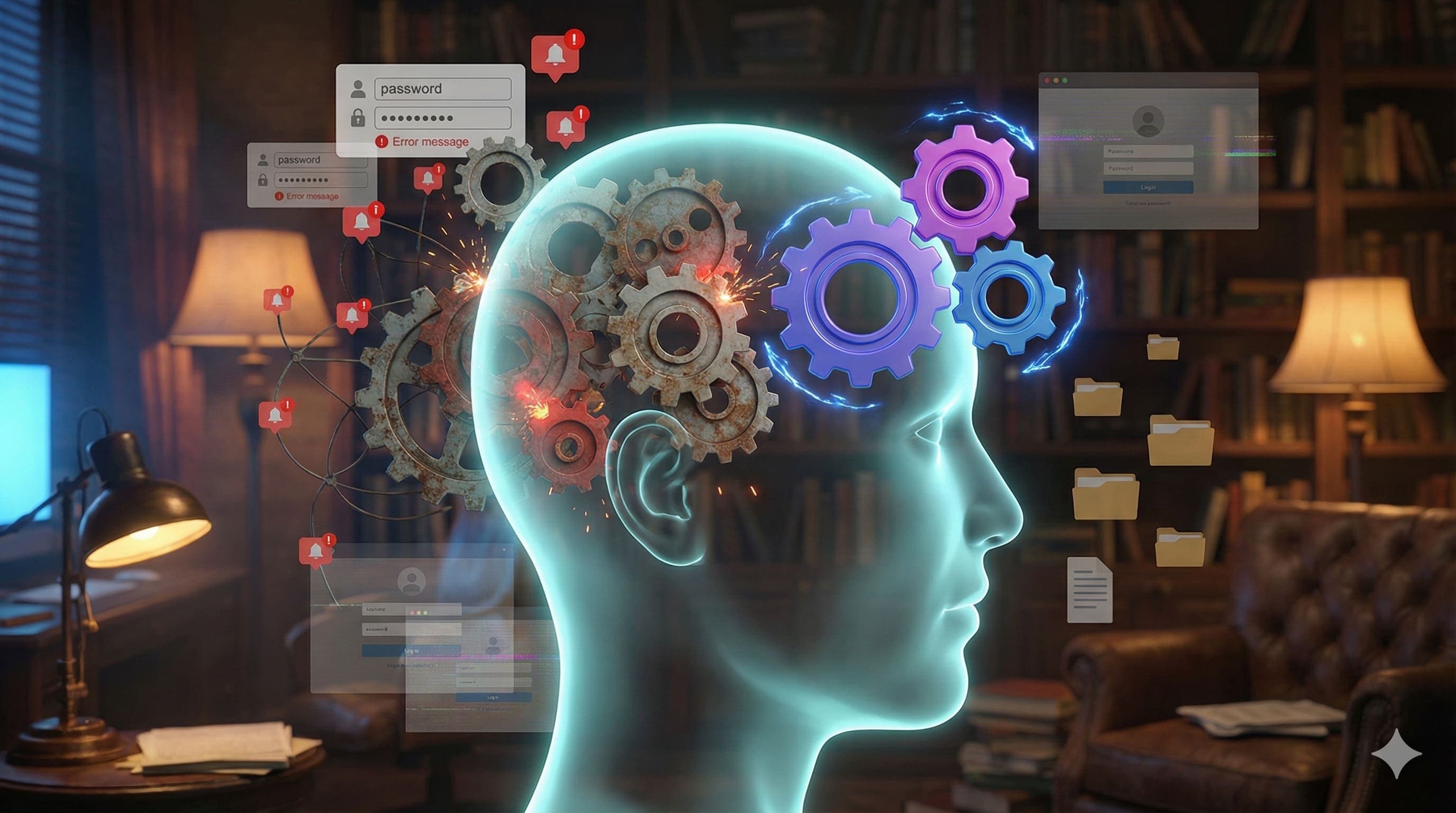
Cognitive fatigue isn't about one catastrophic system failure that brings everything to a halt. It's the accumulation of dozens of small friction points throughout the day, each one requiring a bit more mental energy than it should. Over time, these add up to leave your team exhausted, less creative, and more prone to mistakes, even if they can't quite put their finger on why.
The Death by a Thousand Cuts #
Poor workplace systems don't announce themselves with flashing warning signs. Instead, they chip away at mental resources in ways that feel normal because they've always been there. Consider the employee who starts their morning by logging into seven different systems, each with its own password requirements and login process. They've done this every day for three years, so it feels routine. But routine doesn't mean effortless.
Each login requires a small decision. Which password was it? Did I change this one recently? Is it the version with the capital letter at the start or the number at the end? These micro‑decisions happen before the actual work has even begun. Then there's the system that logs them out after 15 minutes of inactivity, requiring re‑authentication multiple times throughout the day. More interruptions, more tiny cognitive loads.
Or take the process of finding information. In many businesses, locating a specific piece of information requires checking three different places. First, you try the shared drive, but you're not quite sure which folder it's in because the naming convention changed last year and nobody updated the old files. Then you check your email because someone might have sent it around. Finally, you message a colleague who probably knows where it is. Each step feels small, but you've just spent 15 minutes and made a dozen small decisions before even starting on the actual task you needed that information for.
These aren't dramatic problems. Nobody's going to raise them in a staff meeting as urgent issues. But they happen dozens of times per day, to every person in your organisation, every single day. The cognitive cost compounds.
The Adaptation Trap #
Here's what makes cognitive fatigue particularly difficult to address: people adapt. Your team has learned to work around poor systems. They've developed coping mechanisms and workarounds. They might not even realise how much mental energy these systems consume because they've never known anything different.
Someone who has been manually copying data from one spreadsheet to another for five years doesn't see it as a problem anymore. It's just "part of the job." They've become efficient at this inefficient task. The fact that they can do it quickly doesn't mean it's not draining their cognitive resources. It just means they've gotten good at something that shouldn't need to be done at all.
This adaptation masks the problem. When you ask employees what's causing them stress or slowing them down, they often can't articulate it. The issues have become invisible through familiarity. They might complain about being tired at the end of the day or feeling like they're always busy but never getting ahead, but they won't necessarily connect that feeling to the fifteen small system frustrations they navigated before lunch.
The systems aren't broken in an obvious way. They function, after a fashion. Work gets done. But the human cost of making them function is hidden in the accumulated fatigue that people carry home at the end of each day.
Examples of Systems That Drain Mental Energy #
Let's look at some specific examples of how everyday workplace systems create cognitive fatigue. None of these are dramatic failures. All of them are common.
Consider the approval process that requires an email to Manager A, who then forwards it to Manager B, who needs to check with Department C before signing off. Nobody wrote this down as an official process. It just evolved over time. Now, every approval requires remembering this sequence and following up with the right people in the right order. Each approval becomes a small project management exercise rather than a simple yes or no decision.
Or think about the expense reporting system where employees need to photograph receipts, upload them to one system, then manually enter the amounts into another system, then email their manager for approval, who then forwards to finance, who re‑enters everything into the accounting software. This isn't one task. It's six or seven micro‑tasks, each requiring context switching and attention to detail. The cognitive load isn't in any single step; it's in holding the whole process in your mind and executing each piece without missing anything.
File storage provides another rich source of cognitive drain. When employees need to save a document, they face a decision tree. Which drive? Which folder? Should this go in the project folder or the client folder? Both? What naming convention are we using this month? These questions seem trivial, but answer them 50 times a day across different contexts and you've spent significant mental energy just on file management. This is part of the broader problem of disconnected data systems that create hidden costs throughout your organisation.
Then there's the communication fragmentation. Important information might come through email, Slack, Teams, text message, or verbal conversation. Employees need to monitor multiple channels, remember where they saw which piece of information, and often duplicate communications across platforms to ensure everyone sees it. The cognitive cost of managing these multiple streams is substantial, even though each individual message might take only seconds to read.
Software interfaces that are poorly designed create constant small obstacles. Buttons that aren't where you expect them. Processes that require six clicks when two would do. Error messages that don't explain what went wrong or how to fix it. Each interaction requires slightly more thought than it should. Over hundreds of interactions per day, this adds up to significant mental fatigue.
The Productivity Paradox #
Here's something counterintuitive: employees working with poor systems often feel like they're being productive. They're busy all day. They're completing tasks. They can point to a list of things they accomplished. But being busy isn't the same as being effective, and it's certainly not the same as being energised.
When systems create unnecessary friction, employees spend more time on meta‑work. That is, work about work. They're managing the systems, working around the obstacles, finding the information, and coordinating between disconnected tools. This feels like productivity because they're actively doing things, checking items off lists, and solving problems. But they're solving problems that better systems would prevent entirely.
The cognitive fatigue shows up in more subtle ways. Employees might finish their tasks but have no mental energy left for creative thinking or improvement projects. They do the urgent work but never get to the important work. They solve today's problems but don't have the bandwidth to prevent tomorrow's problems. The organisation hums along, but it never quite reaches the next level because everyone is too cognitively drained by the daily grind to think strategically.
There's also the issue of error rates. Cognitive fatigue leads to mistakes, which then require more work to fix, which creates more fatigue. It's a cycle that's hard to break when the root cause isn't obvious. Teams might implement extra checking procedures or reviews to catch errors, but these are treating the symptom rather than the disease. The errors are happening because people are mentally exhausted by poor systems, not because they're careless or incompetent.
More Than Financial Savings #
When businesses do invest in better systems, the justification is typically financial. Will it save time? Will it reduce costs? Will it improve margins? These are valid questions, but they miss a significant part of the picture. Better systems improve human wellbeing, and that has value that extends beyond spreadsheet calculations.
Employees who aren't fighting their tools all day have mental energy left over for creativity, problem‑solving, and innovation. They're more engaged because they're not constantly frustrated by unnecessary obstacles. They make better decisions because they're not already depleted by dozens of micro‑decisions about system navigation. They're more pleasant to work with because they're not carrying accumulated stress from system friction.
This shows up in staff retention. People leave jobs for many reasons, but chronic low‑level frustration with systems and processes is often part of the mix, even if it's not articulated that way. When someone says they're "ready for a change" or "looking for new challenges," sometimes what they really mean is "I'm tired of fighting these systems daily."
It also affects collaboration and innovation. When people aren't mentally drained, they have capacity for the conversations and thinking that actually move a business forward. They can engage with colleagues' ideas, spot opportunities for improvement, and think beyond just getting through today's task list. The intangible benefits of having a team that finishes the day with mental energy to spare are substantial, even if they're difficult to quantify in a business case.
There's a quality‑of‑life aspect that's worth considering as well. Cognitive fatigue doesn't end at 5pm. People take it home. They're more irritable with family, have less patience for life's other demands, and struggle to enjoy their free time because they're genuinely exhausted. Better workplace systems mean people have more of themselves left over for the rest of their lives. That matters, both from a human perspective and from a business perspective that understands the connection between employee wellbeing and long‑term performance.
Recognising the Pattern #
The first step in addressing cognitive fatigue is recognising that it exists. Start paying attention to the small things. How many times do people need to log in to different systems? How many steps does a simple process actually require? How often do employees need to ask where information lives or how to do something?
Watch for workarounds. When employees develop their own systems to bypass or supplement official processes, that's a sign that the official systems aren't working well. The workarounds themselves might be creating additional cognitive load, even if they feel necessary.
Listen for phrases like "it's always been like this" or "you get used to it." These are often signals that people have adapted to poor systems rather than addressing them. The fact that something is familiar doesn't make it optimal. Sometimes the most valuable improvements come from questioning the things that everyone takes for granted.
Track how people feel when they finish work, not just what they accomplished. If your team is consistently exhausted despite not having an obviously overwhelming workload, the systems themselves might be the problem. The cognitive cost of navigating poor processes can be just as draining as a heavy task load, sometimes more so because it's constant and inescapable.
Making It Better #
Improving systems to reduce cognitive fatigue doesn't necessarily require massive investment or dramatic transformation. Sometimes the biggest wins come from small changes that eliminate repetitive friction points. Consolidating logins through single sign‑on, for example, removes dozens of tiny decisions from people's days. Connecting systems so that data only needs to be entered once eliminates hours of duplicated effort and the mental load of ensuring consistency.
Standardising processes and making them visible takes away the cognitive burden of remembering how things work. When employees don't need to hold process knowledge in their heads, they have more mental capacity for actual work. Clear documentation, logical file structures, and consistent naming conventions seem mundane, but they materially reduce daily cognitive load.
The goal isn't perfection. It's reduction of unnecessary friction. Every small improvement compounds. When you save someone from making a dozen tiny decisions about logging in, finding files, or remembering processes, you're preserving mental energy they can use for work that actually matters. The benefits show up in productivity, certainly, but also in employee satisfaction, error rates, innovation capacity, and overall team resilience. If you'd like help identifying and addressing these friction points in your organisation, get in touch to discuss your specific challenges.
The Real Return on Investment #
Better systems pay for themselves in time saved and reduced errors, but that's just the beginning. The real return comes from having a team that isn't mentally exhausted by the tools they use every day. It comes from people who finish work with enough mental energy to think creatively, help colleagues, and actually enjoy their jobs. It comes from building an organisation where the systems support people rather than drain them.
Cognitive fatigue is real, it's pervasive, and it's largely invisible. But once you start looking for it, you'll see it everywhere. Those small frustrations that everyone dismisses as "just how things are" add up to a significant tax on your team's mental resources. Addressing them isn't just about efficiency metrics. It's about creating a workplace where people can do their best work without fighting the systems all day long.
The businesses that recognise this and invest in reducing cognitive fatigue won't just see improved productivity numbers. They'll build teams that are more engaged, more creative, more resilient, and frankly, happier to come to work each day. That's a return on investment that goes well beyond what shows up in the quarterly reports. To track these improvements, consider building a business dashboard that monitors both productivity metrics and employee wellbeing indicators.
A useful companion: Automation ROI Calculator.
Quick Questions
What is cognitive fatigue from poor systems?
Cognitive fatigue is the accumulation of dozens of small friction points throughout the day -logging into multiple systems, finding information in different places, remembering complex processes. Each one requires mental energy. It's not dramatic but adds up to leave teams exhausted and error-prone.
Why don't people notice cognitive fatigue?
People adapt. They've developed workarounds and coping mechanisms. Someone copying data manually for five years doesn't see it as a problem -it's 'part of the job'. The issues become invisible through familiarity, even though they're still draining mental resources.
What are examples of systems that cause cognitive fatigue?
Multiple login systems, unclear approval processes, file storage decisions (which folder? what naming convention?), fragmented communication across email/Slack/Teams, poorly designed software interfaces, and expense reporting that requires entering data in multiple places.
How do I reduce cognitive fatigue in my workplace?
Start with small wins: single sign-on to reduce logins, connect systems so data is entered once, standardise processes with clear documentation, create logical file structures with consistent naming conventions. Every small improvement compounds across dozens of daily interactions.
Other articles worth reading
Efficiency
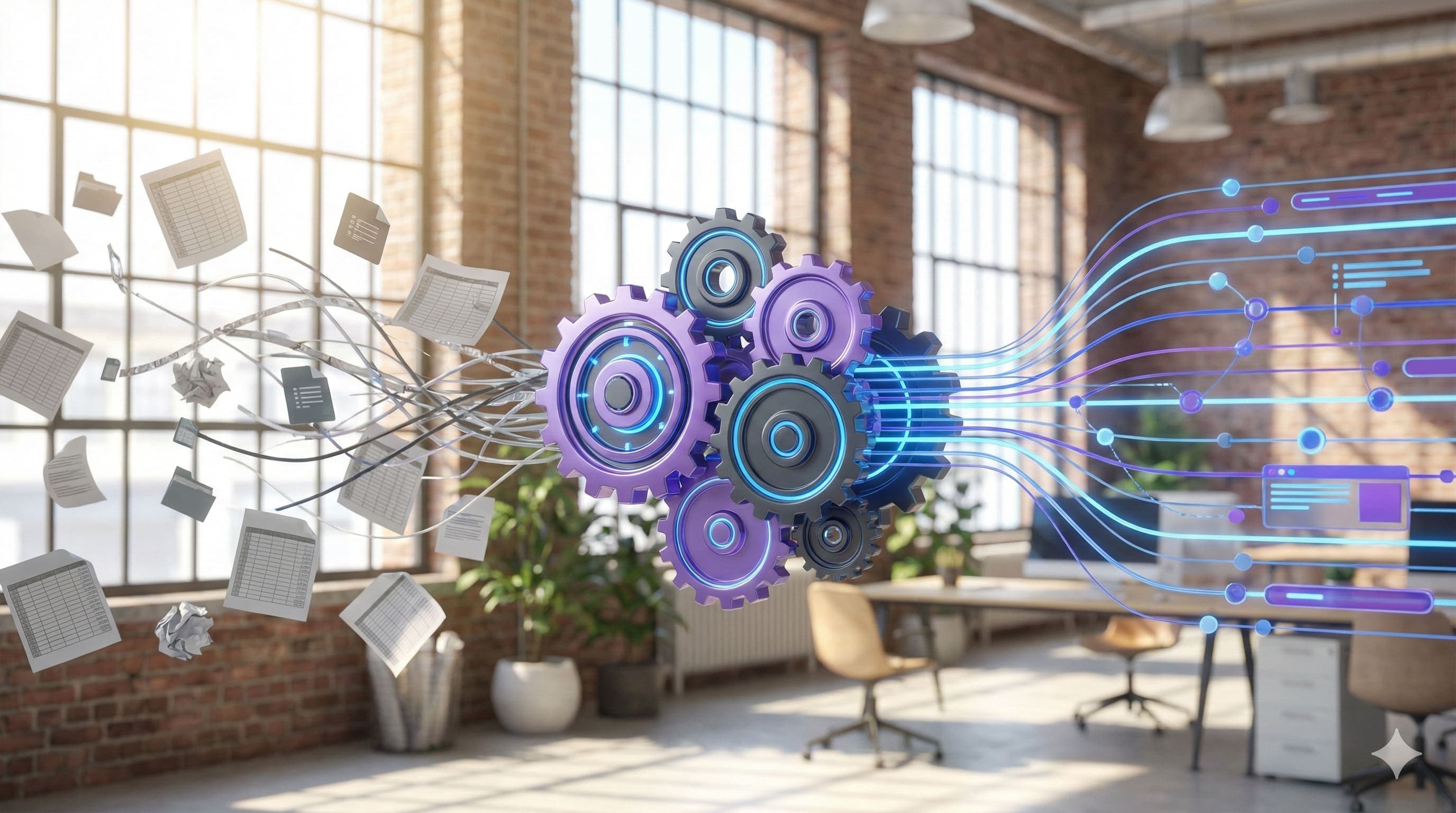
The First Step to Business Efficiency: Sort Your Data Out
Before investing in new software, fix the foundation: disconnected spreadsheets that slow everything down.
Efficiency
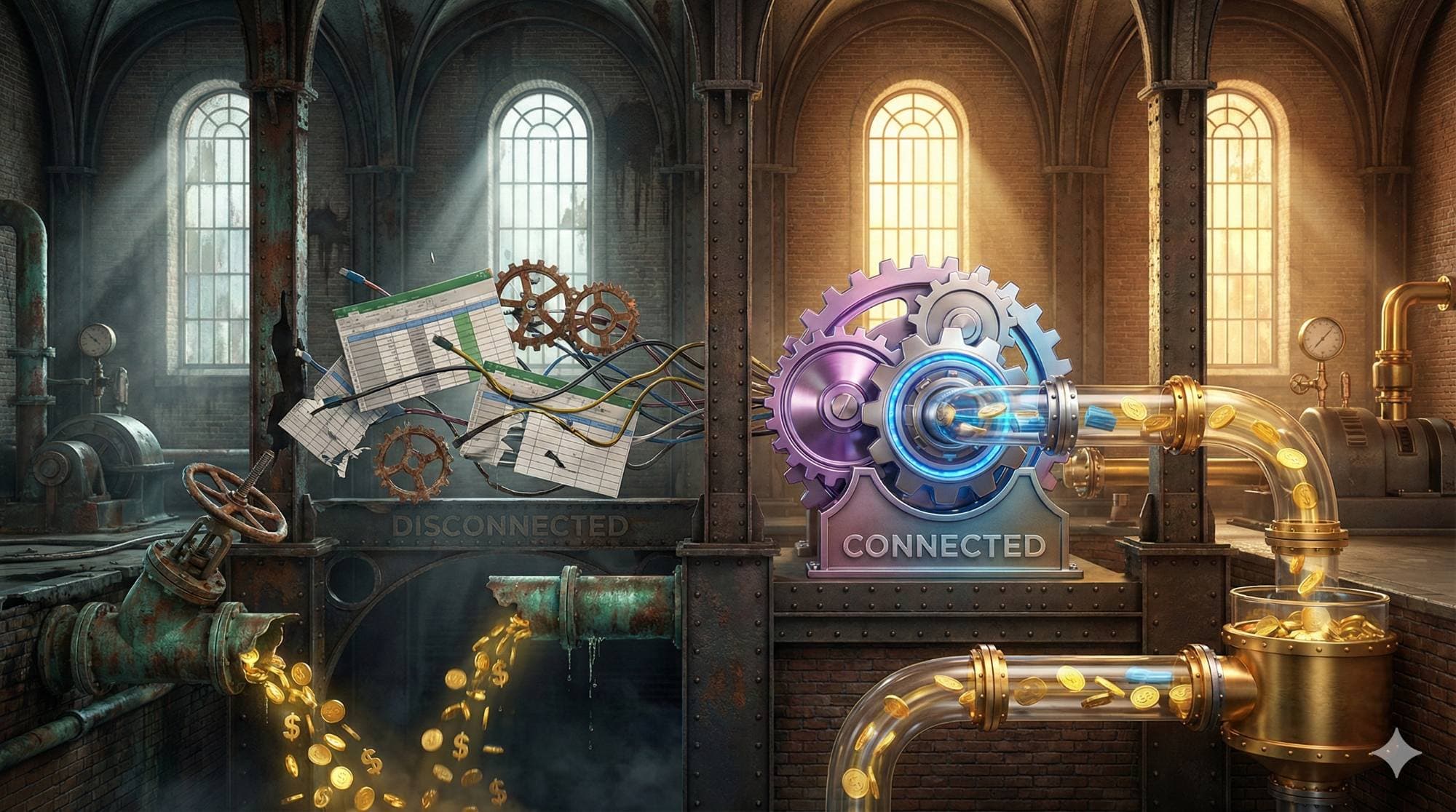
Why Your Spreadsheets Are Costing You Money: The Hidden Cost of Disconnected Data
Manual processes and isolated spreadsheets create hidden costs through wasted labour, missed opportunities, and preventable errors.

Efficiency
Manual Data Entry: Common Mistakes That Slow Down Your Business
Manual data entry kills productivity through inconsistent formatting, delays, human errors, and duplicate work across disconnected systems.