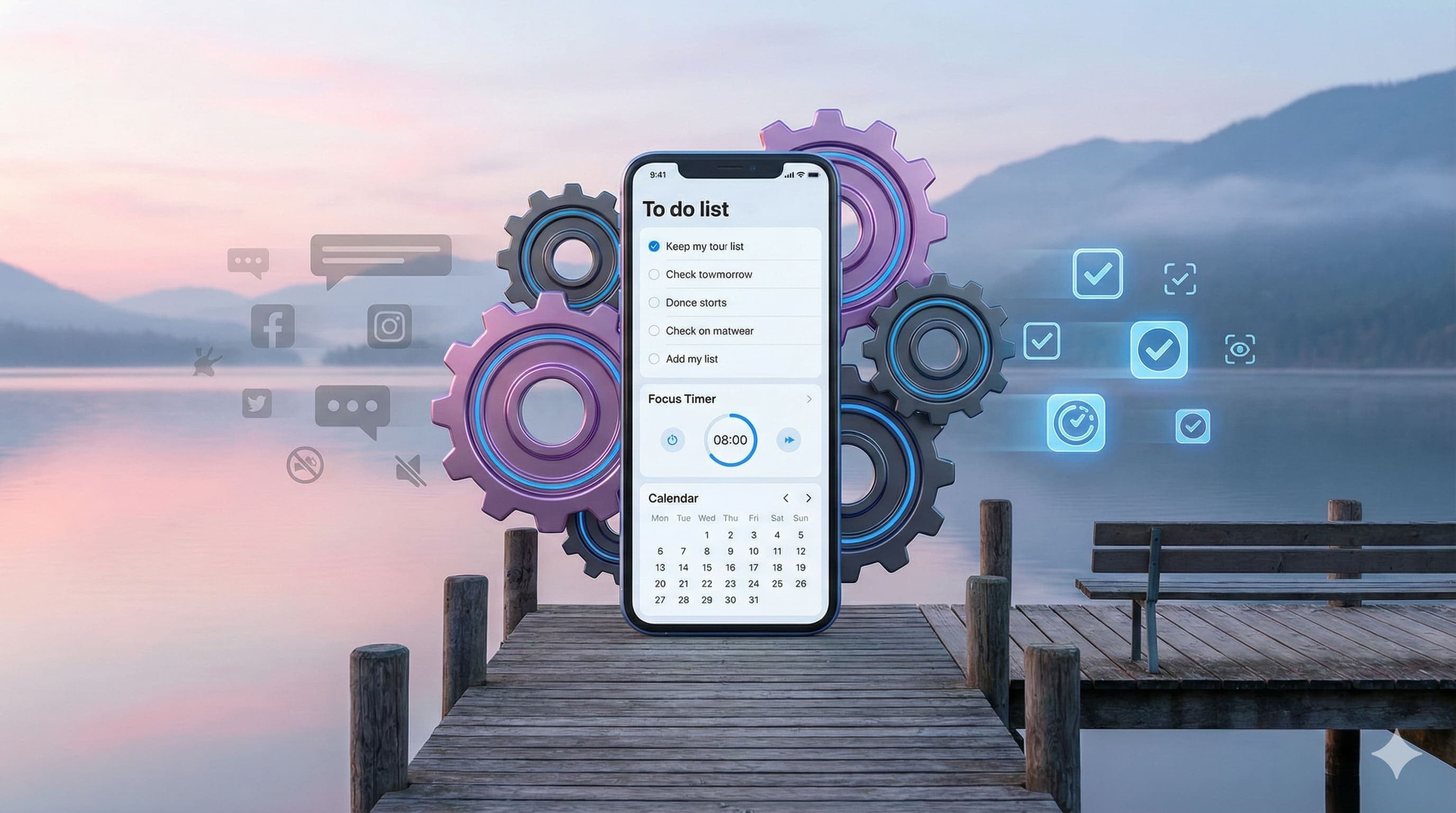
What is the Zeigarnik Effect?
The Zeigarnik Effect is our brain’s tendency to remember unfinished tasks more strongly than completed ones. Understanding how it works - and using it strategically - can help you reduce mental clutter, beat procrastination, and stay focused.
Published 9 November 2025

Lightning Developments article
Practical guidance for NZ businesses improving systems, process, and visibility.
Key Takeaways
- 1Unfinished tasks stick in your mind more than completed ones -this mental tension drives you to finish them
- 2Use this effect by starting tasks early: even 5-10 minutes creates the mental 'hook' that motivates you to return
- 3Break large tasks into smaller chunks to get more completion satisfaction and maintain momentum
- 4Too many unfinished tasks can cause stress and mental overload -keep your open task list manageable
- 5To-do lists and checklists harness this effect: seeing unfinished tasks reminds you, checking them off provides relief
Have you ever started something and found it hard to stop thinking about until it's done? That nagging feeling when a task is incomplete? That's the Zeigarnik Effect. It describes how unfinished or interrupted tasks tend to stick in our minds more than those we finish. The effect is named after psychologist Bluma Zeigarnik, who observed it in the 1920s.
How It Works
- When we begin a task, our brain forms a kind of mental "hook" or tension that keeps the task active in memory.
- If the task is completed, that tension is relieved, and the mind can move on. But when it's left unfinished, the tension stays, making the task linger in our thoughts.
- This tension drives us to either resume the task or feel mental strain until it's resolved. It's a way our minds push for closure.
Why It Can Be Both Helpful and Stressful
| Helpful | Stressful |
|---|---|
| Motivates you to finish things you've started. | Unfinished tasks can overload your mind and reduce focus. |
| Helps memory of things that need doing. | May lead to anxiety, rumination, or inability to relax. |
| Forces awareness of tasks you might otherwise forget. | Too many open tasks = mental clutter. |
How to Use the Zeigarnik Effect to Boost Productivity
Here are strategies to turn this psychological quirk into something that works for you:
1. Break Tasks into Smaller Chunks
Smaller subtasks give more opportunities to complete something and clear the mental tension, keeping momentum high.
2. Start Tasks Early
Even doing a little at the beginning -for example just 5-10 minutes -can create the "hook" that motivates you to return and finish.
3. Set Clear Goals and Deadlines
Knowing what "finished" looks like helps. If tasks are vague, the tension can become aimless and stressful rather than useful.
4. Use To-Do Lists or Checklists
Seeing tasks that are started but not finished visually reminds your brain of what remains. The benefits of using a to-do list go hand-in-hand with the Zeigarnik Effect - checking things off gives real relief.
5. Schedule Task Review Moments
Regularly look over your unfinished tasks. Decide which to push forward, which to drop, and which to delegate. This keeps your task load manageable.
6. Strategic Pauses / Breaks
Sometimes interrupting a task with intention -knowing you'll come back -can actually improve memory and focus. The Pomodoro Technique uses this principle by building deliberate breaks into focused work sessions. But avoid letting many tasks remain incomplete without plan.
Potential Downsides & How to Mitigate Them
- Too much unfinished work can lead to stress, worry, or burnout. To avoid that, keep your list small and review tasks often.
- Tasks started but not finished may become sources of guilt or anxiety if you lose track of them. Use tools (lists, reminders) to keep visibility.
- Distraction from many "open threads" can prevent focus on new tasks. Practising inbox zero can help clear mental load, and you should prioritise and limit how many tasks you keep "open" at once.
Putting It Into Practice: Example Workflow
Here's a possible way to use the Zeigarnik Effect in your daily work:
- Begin your day by listing all tasks you need to do. Identify one larger project. Start on it -even just outline or do the first step -so "open task tension" starts building.
- Use that energy to push through smaller tasks, checking them off your to-do list, which gives satisfaction and relief.
- If interrupted, make a note in your list so you don't lose track. When you return, the tension will drive you to resume.
- Schedule end-of-day review: mark what's done, what needs tomorrow, what you need to delegate.
The Zeigarnik Effect is a tool built into our minds. Use it intentionally -break projects into parts, start early, review often -and you'll find the mental tension of unfinished tasks becomes a driver rather than a drag.
Admin Waste Audit
Find repeated admin before designing a system
Use this when time is disappearing into data entry, chasing, duplicate work, rework, email threads, or manual reporting.
- Finding where admin time and attention are being wasted
- Prioritising the bottleneck before automating around it
- Building a business case for process or software work
Turn this idea into a next step
These free tools help you put rough numbers, priorities, or workflow shape around the problem before choosing software.
Pomodoro Timer
Use focused work sprints when the problem is attention, momentum, or context switching rather than software.
Open toolEisenhower Matrix
Sort work by urgency and importance so the next action is clearer before adding process or software.
Open toolTyping Speed Test
Check whether keyboard speed is a small but measurable productivity constraint in daily admin work.
Open toolQuick Questions
What is the Zeigarnik Effect?
The Zeigarnik Effect describes how unfinished or interrupted tasks tend to stick in our minds more than completed ones. Named after psychologist Bluma Zeigarnik who observed it in the 1920s, it's the 'nagging feeling' when something is incomplete -your brain creates mental tension that pushes for closure.
How can I use the Zeigarnik Effect productively?
Start tasks early -even just 5-10 minutes creates the mental hook that motivates you to return. Break tasks into smaller chunks for more completion satisfaction. Use to-do lists so unfinished tasks stay visible. Set clear goals so you know what 'finished' looks like.
Can the Zeigarnik Effect be harmful?
Yes, too many unfinished tasks can overload your mind, cause anxiety, rumination, or inability to relax. To mitigate this, keep your active task list small, review tasks regularly, and decide which to push forward, delegate, or drop entirely.
Why do I keep thinking about unfinished tasks?
Your brain forms a mental 'tension' when you begin a task. Completing the task relieves this tension, but leaving it unfinished keeps it active in memory. This is your mind's way of pushing for closure -it's trying to help you remember to finish what you started.
Turn the idea into a roadmap
If the article matches a problem in your business, start with a practical AI or technology roadmap before spending money on tools or development.
Other articles worth reading

Benefits of Using a To-Do List