
Efficiency
Business Strategy
Measuring What Matters: How to Quantify the Success of Your Process Improvements
Track real ROI with cycle time, cost per transaction, and error rates. Use automated dashboards to transform vague 'better' into concrete data.
Put your workflow questions into a broader roadmap that reflects your business goals and the resources available. Explore Tech Clarity.
Key takeaways
- Without baseline metrics and targets before implementing changes, you're navigating without a compass -unable to tell if you're drifting off course or making record time
- The efficiency trinity: cycle time (start to completion), cost per transaction (labour per unit of work), and error rate (percentage requiring rework) -these three tell your operational story
- If staff paid $30/hour spend 10 minutes on manual invoice entry, that's $5 hidden labour cost; automation reducing it to 30 seconds drops cost to mere cents -track this for definitive ROI
- Soft metrics matter too: employee pulse surveys and overtime hours reveal if efficiency gains are sustainable; customer NPS validates whether speed improvements actually enhance experience
- Automated dashboards create a virtuous cycle -the tools that improve work also provide measurement data, enabling real-time visibility and early warning systems rather than month-end surprises
When you invest time and capital into improving your business operations, whether through new software, automation, or staff training, you naturally expect a positive return. For many SME owners, however, determining the success of these initiatives often relies heavily on intuition rather than hard evidence. You might feel that the office seems calmer, or that the team appears less stressed, and assume the changes are working. While these subjective feelings are valid indicators of morale, they are insufficient for making strategic business decisions. To truly understand the impact of your improvements, you must move from qualitative observation to quantitative measurement.
Defining clear Key Performance Indicators (KPIs) before you implement a change is the only way to objectively prove that your investment was worth it. Without a baseline and a set of targets, you are essentially navigating without a compass, unable to tell if you are drifting off course or making record time. Measuring success is not about creating a heavy administrative burden or micromanaging your staff with endless charts. It is about identifying the few critical numbers that tell the true story of your operational health. By focusing on the right metrics, you can transform vague notions of "better" into concrete financial data that validates your strategy and guides your future growth.
The Holy Trinity of Efficiency: Time, Cost, and Quality #
The most effective KPIs for process improvement generally fall into three distinct categories: cycle time, cost per transaction, and error rates. Cycle time is perhaps the most immediate and tangible metric for any business looking to streamline operations. It measures the total elapsed time from the start of a process to its completion, such as the number of hours between receiving a customer order and dispatching the goods. By automating the data entry or approval steps within this chain, you can often see dramatic reductions in cycle time. Tracking this metric allows you to promise faster delivery times to your clients with confidence, transforming internal efficiency into a competitive market advantage.
Cost per transaction is the second critical pillar, though it is often harder to calculate without a clear view of your labour allocation. This metric requires you to understand exactly how much human effort goes into a single unit of work, such as processing one invoice or resolving one support ticket. If a staff member paid thirty dollars an hour spends ten minutes manually entering an invoice, the hidden labour cost of that transaction is five dollars. If an automated solution can reduce that time to thirty seconds, the cost drops to mere cents. Tracking this metric over time provides the definitive Return on Investment (ROI) figure for your automation projects, proving that technology is an asset that pays for itself.
The third pillar, error rate, is frequently overlooked but can have the most significant impact on your bottom line. Every mistake made in a manual process carries a cost, whether it is the time spent investigating the error, the cost of shipping a replacement product, or the reputational damage of an angry client. By measuring the percentage of transactions that require rework, you can quantify the "cost of quality" in your business. Automation excels in this area by removing the variable of human fatigue. As you implement digital workflows, you should see your error rate curve flatten towards zero, a metric that directly correlates with higher customer retention and lower operational waste.
Moving Beyond Hard Numbers to Experience Metrics #
While time and money are the easiest metrics to track, the success of a process improvement also relies on the "soft" metrics of employee and customer satisfaction. High-efficiency systems that make your staff miserable are ultimately unsustainable, as they lead to burnout and turnover. Therefore, it is vital to track employee sentiment alongside your productivity stats. This can be done through regular pulse surveys or simply by monitoring the overtime hours required to meet targets. A successful automation implementation should result in a decrease in overtime and an increase in staff engagement, as your team is freed from repetitive drudgery to focus on more meaningful and creative work.
Customer experience metrics, such as your Net Promoter Score (NPS) or Customer Satisfaction (CSAT) score, act as the external validation of your internal improvements. If you have reduced your response time to enquiries by fifty percent, you should see a corresponding uptick in customer satisfaction scores. However, it is important to watch for the inverse; sometimes, over-automating a process can make it feel impersonal, leading to a drop in satisfaction despite faster service. By correlating your operational KPIs with your customer feedback data, you can find the "sweet spot" where efficiency enhances the service experience rather than detracting from it. Intelligent AI solutions can even automate the collection of this feedback, analysing customer emails for sentiment to give you a real-time view of how your process changes are being received.
The Role of Automated Reporting #
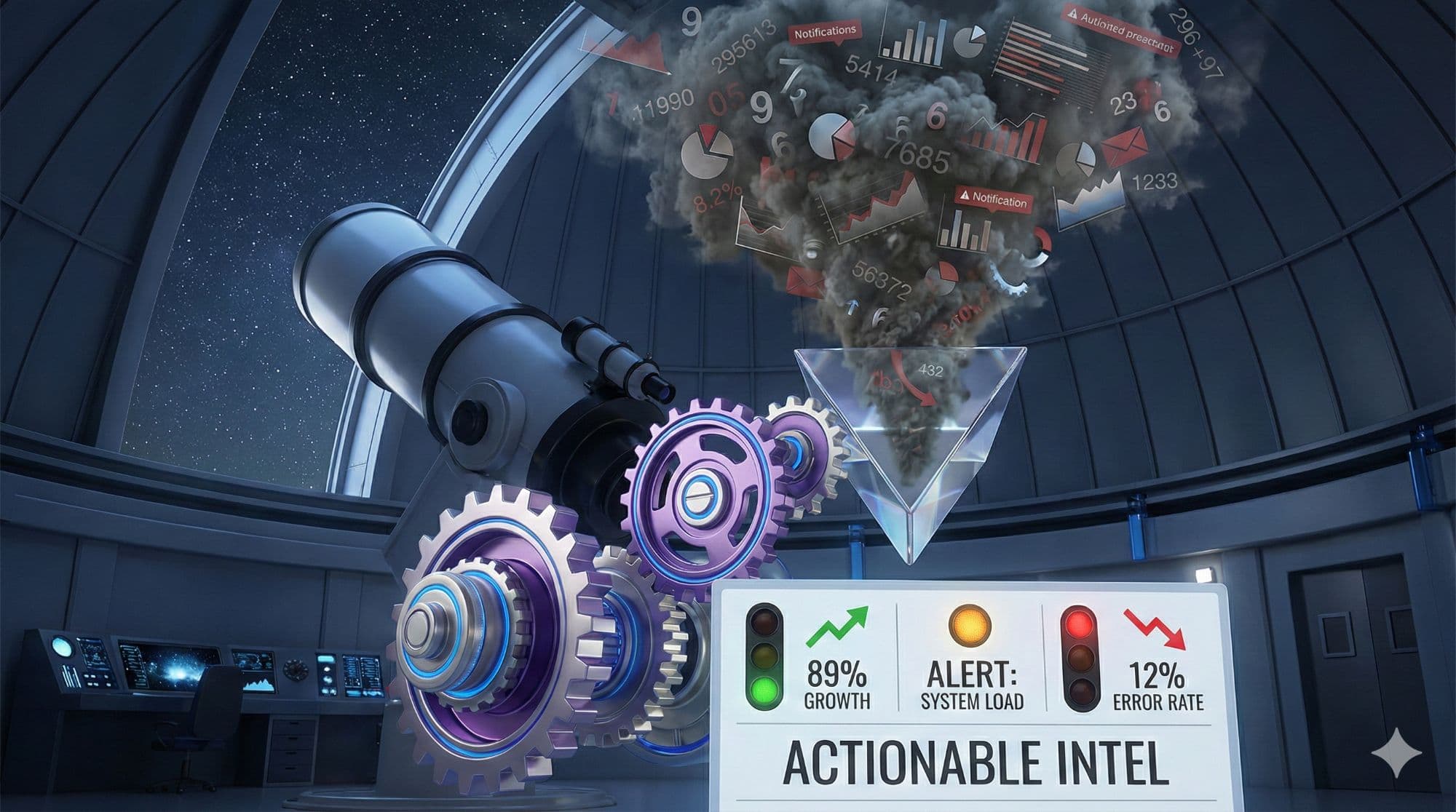
One of the ironies of measuring performance is that the act of measurement itself can become a time-consuming burden if done manually. In the past, business owners might have spent their weekends collating spreadsheets to produce a monthly performance report. Modern process improvement creates a virtuous cycle where the tools used to improve the work also provide the data to measure it. When you digitise a workflow, every step is timestamped and logged automatically in a database. This allows you to build live dashboards that display your critical KPIs in real-time, removing the lag between performance and analysis.
These automated dashboards serve as an early warning system for your business. Instead of waiting for the end-of-month financials to discover that productivity has dipped, you can see a bottleneck forming on a Tuesday morning and intervene immediately. This visibility is what changes a business from reactive to proactive. You can set up alerts that trigger when a specific KPI falls below a certain threshold, such as if the average wait time for a support call exceeds two minutes. This ensures that management attention is directed exactly where it is needed, exactly when it is needed, without requiring you to constantly monitor every aspect of the operation personally. Try our interactive dashboard demo to see how real-time KPIs could look for your business.
Establish Your Baseline Today #
The journey to a data-driven business begins with a single step: establishing your baseline. You cannot celebrate how far you have come if you do not document where you started. Before you change a single process or install a new piece of software, take the time to record your current metrics. Measure how long it really takes to onboard a client, count how many invoices contain errors each month, and calculate the true labour cost of your sales administration. This "before" picture is the foundation of your future success story.
For more on building dashboards to track your performance, see our guide on building your first business dashboard. To understand how to calculate the return on your automation investment, read how to calculate ROI of automation. For insights on capturing accurate time data, see why guesswork is costing you profit.
A useful companion: Interactive Dashboard Demo.
Quick Questions
Why do I need to measure process improvements?
Relying on intuition ('the office seems calmer') is insufficient for strategic decisions. Without a baseline and targets, you can't prove ROI or know if you're on course. Measurement transforms vague notions of 'better' into concrete financial data that validates strategy and guides growth.
What are the key KPIs for process efficiency?
The 'holy trinity' of efficiency metrics: cycle time (elapsed time from process start to completion), cost per transaction (labour hours divided by units of work), and error rate (percentage requiring rework). Together these tell the complete story of your operational health.
How do I calculate cost per transaction?
Determine labour cost per unit of work. If a $30/hour employee spends 10 minutes manually entering an invoice, that transaction costs $5 in hidden labour. Automation reducing time to 30 seconds drops the cost to cents. Tracking this over time provides definitive ROI figures.
What soft metrics should I track alongside efficiency?
Employee sentiment (pulse surveys, overtime hours) reveals if efficiency gains are sustainable or causing burnout. Customer experience metrics (NPS, CSAT) validate that speed improvements enhance rather than detract from service. Correlate operational KPIs with customer feedback to find the sweet spot.
How do automated dashboards help with measurement?
Digitised workflows automatically timestamp and log every step, enabling live dashboards without manual spreadsheet collation. They provide early warning systems -see bottlenecks forming on Tuesday morning, not in month-end financials. Set threshold alerts so management attention is directed exactly where needed.
Other articles worth reading

Efficiency
Bottleneck Analysis: How to Identify Where Your Team Loses Time
Find invisible constraints limiting capacity. Your business speed is determined by its narrowest point. Widen bottlenecks to unlock growth.

Efficiency
Escaping the Trap of Tribal Knowledge: Why Documentation is Your Most Valuable Asset
Transform your business from talented individuals into a robust system. Documentation democratises knowledge so teams succeed independently.

Efficiency
Employee Time Tracking: Why Guesswork is Costing You Profit
Manual timesheets become 'Friday fiction'. Staff recall creates revenue leakage and distorts pricing data from unbilled micro-tasks.