← Back to Articles
Custom Software
Business Strategy

10 Signs Your Business Has Outgrown Off-the-Shelf Software

Still patching together spreadsheets and SaaS tools? Here are 10 signs it's time to consider building something custom.

10 Signs Your Business Has Outgrown Off-the-Shelf Software
#custom software#business growth#software limitations#scaling#SaaS

Key Takeaways

  • 1Spreadsheets as a core operational tool — not just for analysis — are one of the clearest signals that you've outgrown off-the-shelf software.
  • 2If you need three or more tools to complete one end-to-end process, you're already running a custom workflow without the software to support it.
  • 3Staff time spent on manual data entry, copy-pasting, and workarounds is a real business cost — add it up and compare it to what a custom solution would cost.
  • 4When your software limits your ability to take on new work or new clients, it's actively constraining your growth.
  • 5You don't need to replace everything at once — often one targeted custom tool is enough to remove the biggest bottleneck.

Most businesses don't wake up one day and decide they need custom software. It's more of a slow creep — a workaround here, a new spreadsheet there, another SaaS subscription to fill a gap — until one day you're managing five tools, nothing talks to anything else, and your team is spending half their day doing things computers should be doing for them.

Here are ten signs that you've reached that point. None of them are definitive on their own, but if several of them apply to your business, it's worth having a proper conversation about what a custom solution might look like.

1. Spreadsheets Are Running Your Operations

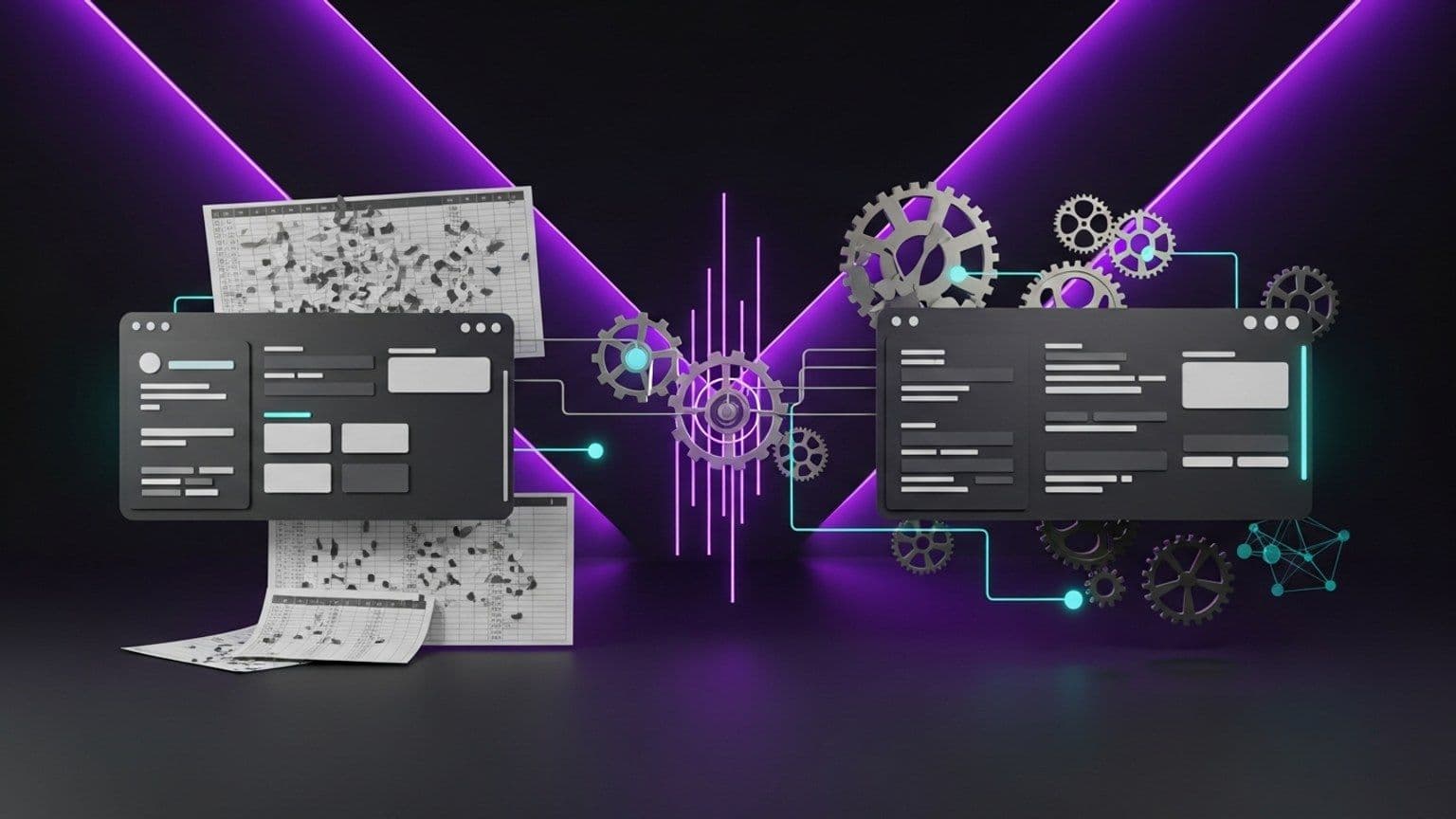
Spreadsheets are fantastic tools for analysis, modelling, and one-off reporting. They become a liability when they're the operational backbone of your business — the thing your team updates every day to track jobs, clients, inventory, or anything that changes constantly.

Operational spreadsheets break silently (a formula error that no one catches), don't handle multiple simultaneous users well, can't send notifications or automate follow-ups, and become impossible to hand over when the person who built them leaves. If your business runs on "the spreadsheet," that's a sign.

2. You're Copying Data Between Systems Every Day

If someone on your team routinely exports data from System A and imports it into System B, or copy-pastes information between tools, you have a process that software should be handling automatically. Manual data transfer is slow, error-prone, and demoralising work. It's also completely solvable.

Sometimes this is fixed with an integration rather than a full custom build — but either way, it's a signal that your current toolset isn't connected the way it needs to be.

3. You Have a "Train the Workaround" Onboarding Process

Think about how you onboard a new team member. How much of that training time is about teaching them to use your tools, versus teaching them the workarounds because the tools don't quite work the way your business works?

If there's a meaningful answer to "the system does X but we actually do Y because..." — that's a workaround. If there are many of these, your software is working against your process rather than with it.

4. No Two Systems Talk to Each Other

Your job management tool doesn't connect to Xero. Your CRM doesn't know about your job status. Your scheduling tool doesn't update your customer portal. You have good tools individually, but each one lives in its own silo, and your team has to manually keep them all in sync.

This is one of the most common patterns I see in NZ businesses. The individual tools are fine — but the gaps between them are where the time and errors accumulate. Sometimes this is fixed with integrations (Zapier-style connectors or custom API work). Sometimes it points to a need for a more unified system.

5. Reporting Requires a Dedicated Effort Each Time

Getting a clear picture of how your business is performing should be fast. If producing a management report, a client update, or a weekly summary takes someone half a day of pulling data from different places and formatting it in a spreadsheet — that's not a reporting problem, it's a system problem.

Custom software can give you dashboards and reports that update in real time from your actual operational data. The reporting is then a byproduct of the work you're already doing, not a separate manual project.

6. Your Software Can't Keep Up With Your Business Rules

Every business has rules: pricing logic, approval workflows, client tier conditions, exceptions for certain scenarios. Generic software handles generic rules. If your pricing has fifteen variables and the software only handles five, or your approval process has conditions that the tool doesn't support, you end up managing those rules outside the software — back to spreadsheets and email chains.

Custom software can encode your actual business logic, so the system handles it automatically rather than relying on people to remember and apply rules manually.

7. You're Paying for Features You Never Use

This one's subtle. If you're on an expensive SaaS plan because you need one specific feature that's only available at that tier, but you're using maybe 20% of what you're paying for, the economics are off. You might be better served by a targeted custom tool that does exactly what you need and nothing else.

This is especially worth examining if you're paying for multiple tools that each partially overlap. Four tools each doing 25% of a job is often better served by one tool that does 100% of it, built for your specific situation.

8. Clients or Staff Are Asking for Something You Can't Deliver

Are clients asking for a portal where they can check their job status, view documents, or submit requests — and you can't offer it because your current tools don't support it? Are staff asking for a mobile app, offline access, or a feature that your SaaS vendor has had on their roadmap for three years?

When your software limitations are becoming visible to the people you serve, that's a significant signal. A custom solution means you control the roadmap — you can build what you actually need, not wait for a vendor to prioritise it.

9. Your Software Is Actively Limiting Your Growth

Can your current tools handle twice the volume of work? Three times? If scaling up would break your processes — because the spreadsheet gets too big, the manual steps take too long, or the system can't handle more users — your software is a ceiling on your growth.

This is a particularly clear case for custom software: when the cost of not building it is measured in revenue you can't capture because your tools can't support it.

10. You've Looked at Every Tool on the Market and None Fit

Sometimes the search itself tells you the answer. If you've evaluated eight different SaaS tools, watched demos, done trials, and you keep coming back to "it almost works but..." — that's information. It might mean your requirements are genuinely distinctive enough that no off-the-shelf tool is designed for them.

Not every niche is served well by the SaaS market. Some industries, some workflows, and some combinations of requirements simply don't have a great existing tool. If you've done a genuine market search and come up empty, building something custom isn't a last resort — it's the obvious next step.

What to Do if Several of These Apply

If you're nodding along to five or six of these, the first step isn't immediately commissioning a custom software build. The first step is getting a clearer picture of where the real pain is and what solving it would actually look like.

A discovery process — a structured conversation with a developer about your current workflow, your pain points, and your goals — typically takes a few hours and gives you a much clearer picture. You'll understand what scope makes sense, what it might cost, and whether the investment is worth it.

You also don't have to solve everything at once. Often the right first step is one targeted custom tool that addresses the biggest bottleneck — the thing that's costing the most time or causing the most errors. That's usually faster, cheaper, and lower risk than trying to rebuild your entire tech stack from scratch.

The goal is a setup where your software works for your business, not the other way around. For a lot of NZ small businesses, that's closer than they think.

Quick Questions

At what business size does custom software start to make sense?

Size matters less than complexity. I've worked with businesses of 4 people who genuinely needed custom software because their process was distinctive, and businesses of 50 who were fine with off-the-shelf. The question is whether your workflow is standard or unique — not how many staff you have.

What if I only have one or two of these signs?

One or two signs might mean you need a better-configured off-the-shelf tool, or a simple integration rather than a full custom build. The more signs that apply, and the more they're costing you in real time and money, the stronger the case for custom software.

How do I convince my business partner or board that this is worth investing in?

Quantify the current cost. Calculate how many hours per week are lost to manual workarounds and what that costs at your team's hourly rate. Add any errors, delays, or lost revenue you can attribute to your current setup. Then compare that annualised cost to the investment in a custom solution. Numbers make the argument better than frustration does.

Is there a way to test whether custom software would actually help before committing to building it?

Yes — a discovery process. A good developer will spend a few hours mapping your current workflow, identifying where the real pain points are, and scoping what a solution might look like. This gives you a much clearer picture before you commit to anything. It's also worth trying to prototype or wireframe the solution with your team to make sure you're solving the right problem.

Free Assessment

Discover Your Automation Potential

Take our 2-minute quiz to find out how much time and money you could save. Get personalised recommendations for your business.